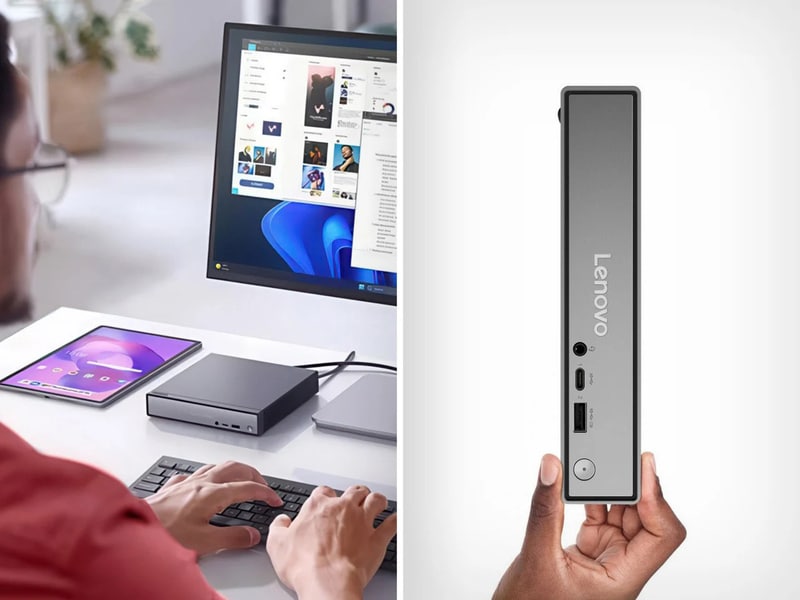
The ThinkCentre Neo 50q Gen 6 was introduced by Lenovo as a compact desktop computer powered by Intel Core Ultra processors in a chassis measuring approximately seven by seven inches. The system is available with either a Core Ultra 5 226V or Core Ultra 7 256V processor, paired with 16GB of LPDDR5X memory and up to 1TB of SSD storage. Intel Arc integrated graphics and an NPU delivering up to 40 TOPS support AI workloads, while the compact enclosure retains the footprint of the previous generation with updated internal hardware.
The desktop includes a 10Gbps USB-C port, HDMI 2.1, DisplayPort 1.4, Gigabit Ethernet, Wi-Fi 6, and Bluetooth 5.1 for wired and wireless connectivity. The Core Ultra 5 model starts with a 512GB SSD, while the Core Ultra 7 configuration increases storage to 1TB and upgrades the integrated graphics.
Image Credit: Lenovo
What's Driving This Trend
- Compact AI Desktops
- Small-form-factor PCs with integrated NPUs create opportunities for localized AI processing in offices, clinics, classrooms, and retail environments without relying heavily on cloud infrastructure.
- Edge Productivity Hardware
- High-performance compact computers signal a shift toward workstation-grade capabilities at the edge, enabling space-efficient deployments for hybrid work, digital signage, and operational automation.
- Miniaturized Enterprise Computing
- Dense hardware designs with modern processors, fast memory, and advanced connectivity open new possibilities for replacing bulky office towers with scalable, low-footprint business systems.
Who This Affects Most
- Business Computing
- Enterprise hardware vendors can benefit from demand for compact Windows desktops that combine manageability, AI acceleration, and strong connectivity in standardized workplace deployments.
- Artificial Intelligence
- On-device AI capabilities in everyday desktops expand the market for software optimized for local inference, privacy-sensitive automation, and low-latency business workflows.
- Information Technology
- IT infrastructure planning is increasingly shaped by compact, energy-conscious endpoints that support distributed computing needs while simplifying deployment across constrained physical spaces.