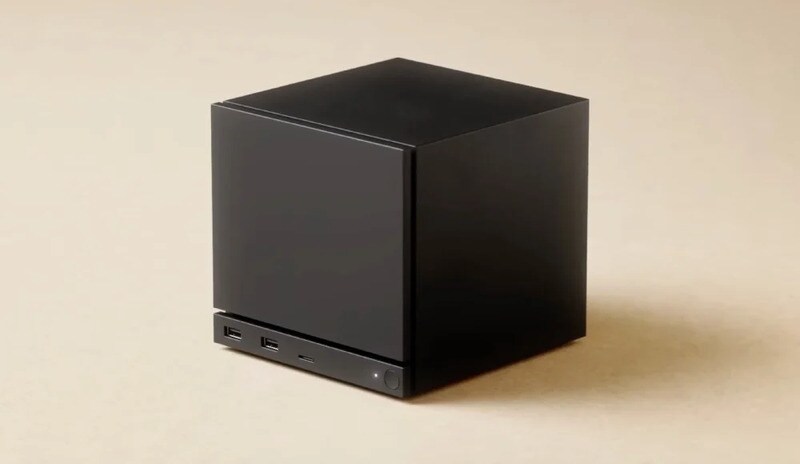
The Steam Machine by Valve reenters the market as a living room gaming system that blends console simplicity with PC-level performance. Powered by a semi-custom AMD architecture built on Zen 4 and RDNA 3, the updated model aims to deliver smooth 4K gaming at 60 frames per second while maintaining the flexibility of a desktop library. The device runs on SteamOS, giving players access to a wide range of titles without the usual setup complexity of a traditional PC.
A compact cube chassis with interchangeable covers supports a clean aesthetic and future upgrades. Storage options include 512GB and 2TB SSD configurations, and the accompanying controller is designed to balance precision with familiarity for varied genres. By positioning the hardware between console accessibility and PC power, the Steam Machine establishes a renewed pathway for living room gaming centered on performance, modularity, and ease of use.
Image Credit: Valve
Why This Trend Is Growing
- Convergence of Console and PC Gaming
- Hybrid systems like the Steam Machine blur the lines between traditional consoles and PCs, offering users the streamlined experience of a console with the robust performance capabilities of a gaming PC.
- Modular Gaming Systems
- The introduction of interchangeable components in gaming systems allows for customization and easy upgrades, catering to consumers who desire longevity and personalization in their gaming setups.
- Living Room Gaming Hub
- By focusing on delivering console-level simplicity with high-performance gaming, devices like the Steam Machine are transforming the living room into a central hub for immersive home entertainment.
Industries Being Reshaped
- Gaming Hardware Manufacturing
- The evolution towards hybrid gaming systems creates opportunities for manufacturers to develop modular components and high-performance chips tailored for versatile gaming experiences.
- Home Entertainment
- With the integration of powerful gaming systems that also serve as entertainment centers, the home entertainment industry is expanding to accommodate new forms of interactive media and content consumption.
- Digital Game Distribution
- As devices like the Steam Machine emphasize digital libraries and seamless access to a wide range of games, digital distribution platforms can focus on enhancing user interfaces and expanding game offerings.