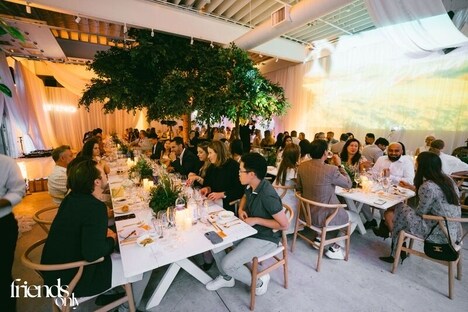
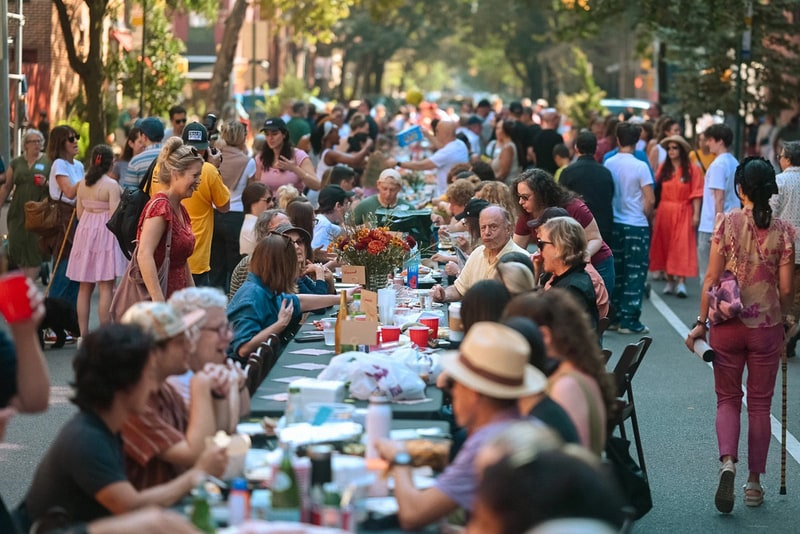
The Longest Table is a large-scale communal dining concept centered on using shared meals as a tool for social connection and community building.
Designed as open-air gatherings in public spaces, the initiative brings large groups of people together around a single extended table to encourage conversation, participation, and face-to-face interaction. Unlike traditional dining events focused on entertainment or hospitality, the concept emphasizes accessibility, inclusivity, and informal engagement, with events free and open to the public.
Hosted in parks, schoolyards, streets, and other community-centered environments, The Longest Table reflects a growing interest in experiential formats that prioritize belonging and collective participation. The initiative also highlights how communal dining is being reimagined as a social infrastructure model, transforming food-centered experiences into opportunities for neighborhood engagement, relationship-building, and broader community interaction in increasingly digital and individualized societies.
Image Credit: The Longest Table
What's Driving This Trend
- Communal Dining Resurgence
- Reimagining meals as public rituals creates opportunities for scalable platforms that convert eating occasions into structured community engagement nodes.
- Social Infrastructure Events
- Framing gatherings as civic infrastructure suggests models that integrate food-driven programming into municipal strategies for social cohesion.
- Open-air Experiential Programming
- Large-format outdoor dining experiences point to modular event systems that blur lines between hospitality, public space activation, and place-making.
Who This Affects Most
- Urban Planning
- Planners can leverage communal meals as temporal placemaking tools that reconfigure public spaces for inclusive social interaction.
- Food Service and Catering
- Catering models oriented around large, public, free-to-attend events indicate potential for new pricing, supply-chain, and volunteer-sourced staffing frameworks.
- Event Technology and Experience Design
- Technology-enabled coordination and physical design systems could transform how large communal events are scaled, personalized, and integrated with local networks.