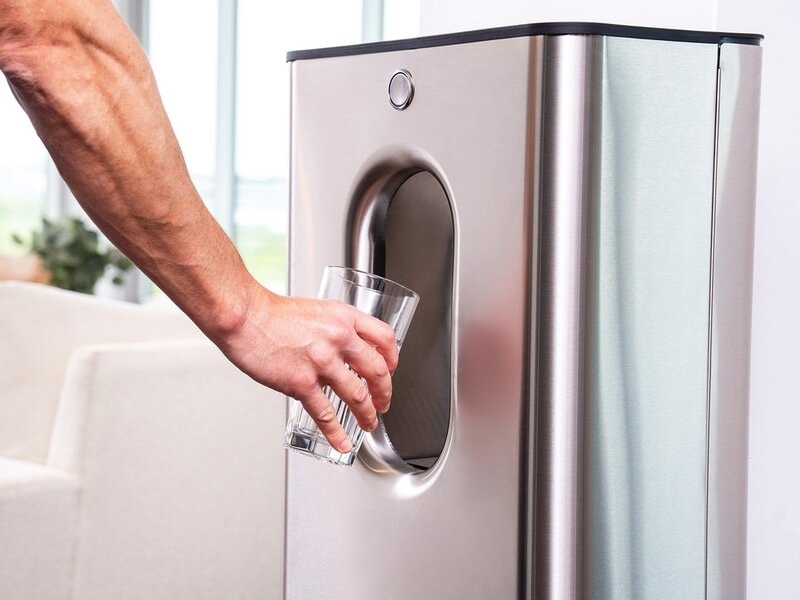
The Atmospheric Water Generator device converts air into drinking water by harvesting moisture using advanced hydrophilic materials and condensation technology. The system draws ambient air through metal-organic frameworks or hydrogel membranes that trap water vapor, then transfers the captured moisture into a sealed chamber where it condenses into liquid form. A built-in purification stage ensures that the final water is safe for consumption, comparable or superior to standard tap supplies.
This design addresses the critical global challenge of clean-water access by offering a compact, scalable solution that functions independently of existing infrastructure. Its sculptural form integrates seamlessly into homes or micro-spaces while delivering essential utility. By transforming invisible atmospheric humidity into potable water, the device combines form, function and social impact—redefining what a household appliance can achieve in both design and sustainability.
Image Credit: Cody Soodeen
Why This Trend Is Growing
- Clean-water Accessibility
- Emerging technologies like Atmospheric Water Generators are revolutionizing access to potable water, providing solutions that bypass traditional water infrastructure.
- Sustainable Home Appliances
- The integration of sustainability in household devices is leading to innovations that offer both environmental benefits and enhanced utility in everyday life.
- Hydrophilic Material Advances
- Innovations in hydrophilic materials are enabling new applications in water harvesting, which can significantly impact resource management and conservation efforts.
Industries Being Reshaped
- Water Technology
- The atmospheric water generation industry is transforming the water supply landscape with devices that extract and purify water directly from the air.
- Home Appliance Design
- Household appliance design is being reimagined to blend functionality and aesthetics while meeting sustainability goals, setting new standards in product development.
- Environmental Engineering
- Innovations in atmospheric water harvesting highlight the role of environmental engineering in creating solutions that support sustainable living practices.