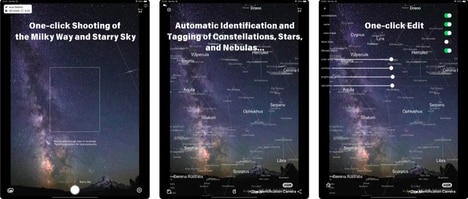
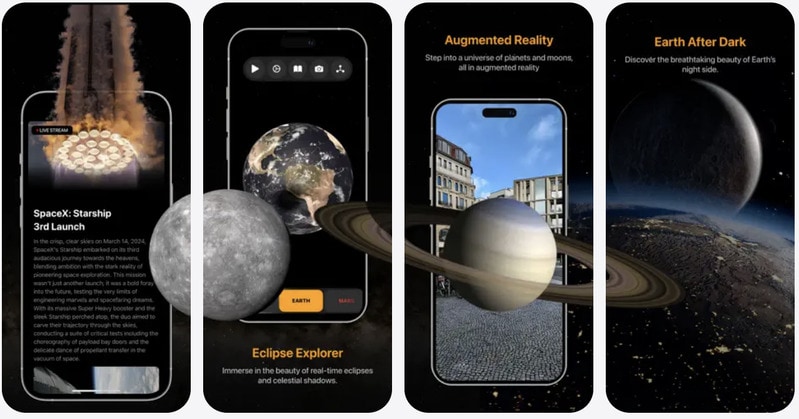
Space Gate offers an interactive way to explore celestial environments through AR astronomy, blending augmented reality with educational astronomy features for both fun and learning. Users can examine planets, moons, and other bodies at scale, providing a visual framework for understanding spatial relationships within the solar system.
The app also includes simulations such as black hole visualizations, which introduce complex astrophysical concepts in an accessible format. Additional tools—like live launch viewing and NASA’s APOD integration — extend engagement by connecting users to real-time and archival space content. From a business perspective, AR-driven learning tools demonstrate how immersive technology can enhance information retention and user interaction, supporting sectors where visual comprehension and experiential learning provide strategic value.
Image Credit: Space Gate
Key Themes Behind This Trend
- Immersive AR Learning
- Augmented reality tools are redefining educational landscapes by offering interactive and engaging learning platforms.
- Space-themed Simulations
- Simulation-based applications allow users to visualize complex astrophysical phenomena in an easily graspable format, simplifying the learning curve.
- Real-time Space Engagement
- The integration of live space events into apps enhances real-time user engagement and bridges the gap between academic learning and field experience.
Where This Applies
- Education Technology
- EdTech industry benefits from AR applications that support interactive and immersive learning experiences, catering to diverse learning styles.
- Space Exploration
- Commercial space sectors can leverage AR tools to intensify public interest and provide deeper insights into space exploration and celestial phenomena.
- Entertainment Media
- The entertainment industry can expand its content offerings by integrating educational AR features to attract audiences interested in space and science.