Millions of adults struggle to get quality sleep, but so do youth and adolescents, and Nucu is addressing the sleep gap with advanced sleep monitoring for kids and teens ages four to 18. Beyond being detrimental to long-term well-being, poor sleep quietly undermines kids' ability to focus, retain information, and show up fully in the classroom, with far-reaching effects on learning, behavior, growth, and development.
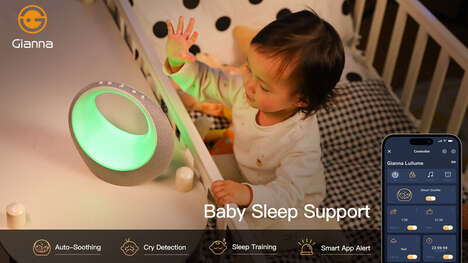
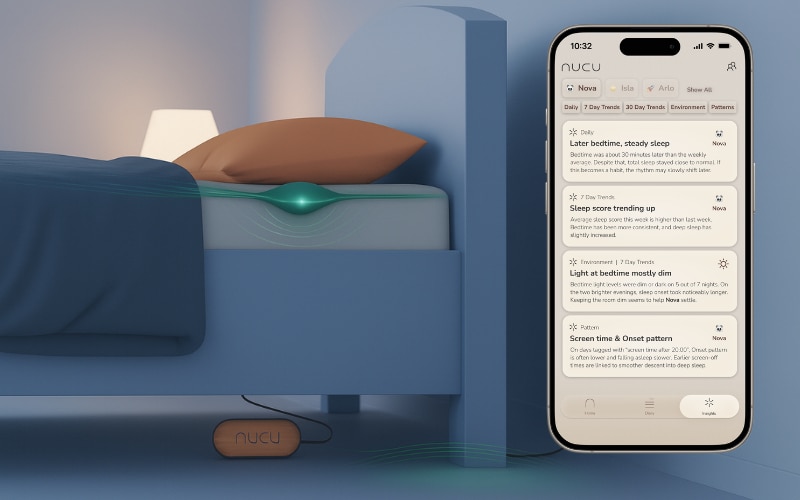
Rather than introducing a wearable that kids would quickly outgrow or might be resistant to wearing, Nucu developed patent-pending nearable sensor technology that tracks sleep without requiring contact, activation or recharging. Placed in the sleep environment, this technology keeps tabs on biosignals—breathing, movement, and heart rate—and considers environmental factors like ambient light, sound levels, humidity, and temperature to provide a picture of total sleep health.
Why This Trend Is Growing
- Nearable Sleep Sensors
- A sensor-driven platform providing continuous, contactless monitoring of breathing, movement, and heart rate within a child’s sleep environment that can create rich longitudinal sleep records.
- Pediatric Sleep Analytics
- An analytics stack that fuses biosignals and environmental inputs to define age-specific sleep phenotypes and predictive markers for cognitive and developmental outcomes.
- Contextual Environmental Monitoring
- A model where ambient light, sound, humidity, and temperature are correlated with physiological sleep metrics to reveal household-level drivers of pediatric sleep disruption.
Industries Being Reshaped
- Consumer Sleep Technology
- Contactless nearable devices positioned as child-friendly alternatives to wearables that could shift product design toward passive, long-term home monitoring.
- Pediatric Healthcare
- Clinical care and research settings that can draw on objective, home-collected sleep data to refine diagnostics and personalized treatment plans for sleep-related developmental issues.
- Smart Home and Iot for Families
- Connected home ecosystems that integrate child-focused biosensing with environmental controls and alerts, creating new data-driven family wellness services.