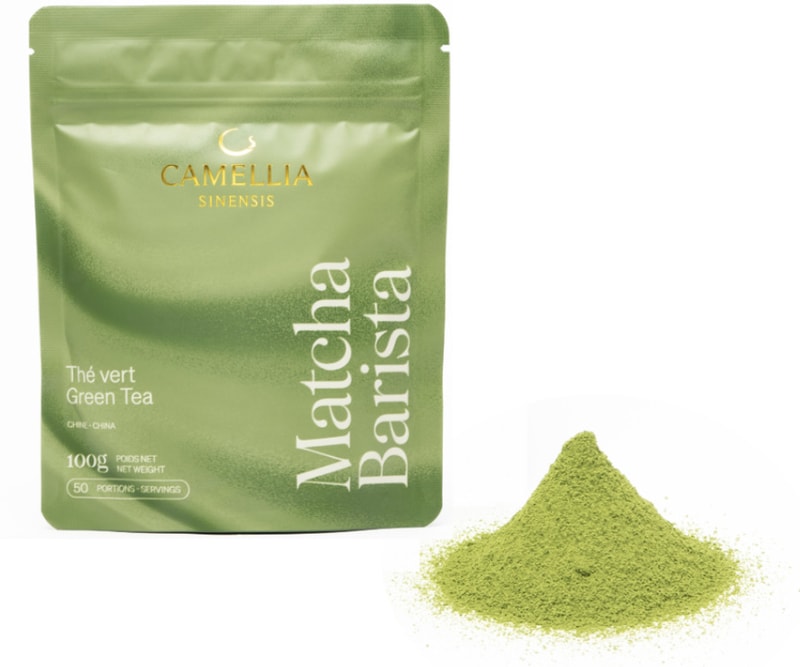
Specialty tea company Camellia Sinensis has introduced Matcha Barista — a new matcha powder sourced from China's Guizhou Province and developed in partnership with producer Bai Zhizhen.
The Chinese matcha powder was from a blend of Zhongcha 108, Longjing, Fuding, and Jiukeng cultivars. The tasting profile features vegetal notes reminiscent of arugula with subtle hints of milk chocolate. As such, the product delivers a novel experience since traditional matcha typically leans toward grassy or umami profiles.
Camellia Sinensis positions the Matcha Barista product as versatile enough for lattes, smoothies, and baked goods while still preserving the aromatic complexity that dedicated matcha enthusiasts seek. This formulation offers an alternative to Japanese matcha at a time when global demand is straining Japanese supply. Camellia Sinensis also notes that this is "the first matcha from China to secure a place in [its] selection."
Image Credit: Camellia Sinensis
What's Driving This Trend
- Chinese-sourced Specialty Matcha
- Sourcing high-quality matcha from Chinese provinces introduces alternative supply chains that could displace traditional Japanese-dominated sourcing models.
- Barista-grade Matcha for Versatility
- Formulations designed specifically for lattes, smoothies, and baking enable broader culinary applications that expand matcha use beyond ceremonial and pure-preparation markets.
- Flavor-forward Matcha Profiles
- Emerging flavor profiles emphasizing vegetal and chocolate notes shift consumer expectations and create space for differentiated product lines focused on taste innovation.
Who This Affects Most
- Tea Retail and E-commerce
- Online and specialty retailers could leverage novel origin stories and unique flavor profiles to curate premium assortments that challenge incumbent brand loyalties.
- Foodservice and Cafes
- Cafes and beverage chains may adopt barista-grade matcha blends to diversify menus and respond to supply constraints in traditional Japanese matcha sources.
- Food Manufacturing and Baking Ingredients
- Ingredient suppliers for baked goods and beverages might integrate versatile matcha powders into ready-mix formulations that standardize flavor while accommodating large-scale production.