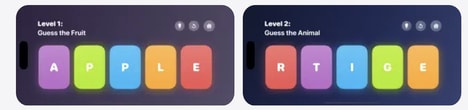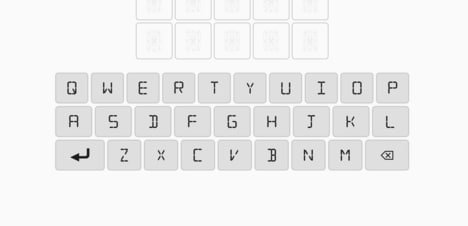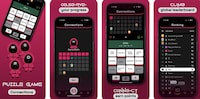
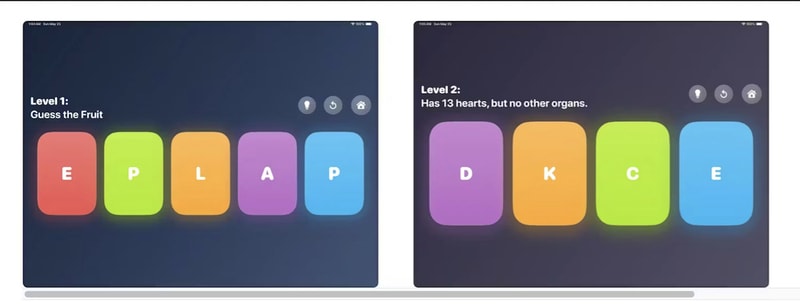
Jumble Joy operates within the casual word puzzle and brain training gaming space, focusing on anagram-style challenges that test vocabulary and pattern recognition. Players interact with shuffled letter cards and rearrange them into correct words by dragging each letter into position.
The gameplay begins with simple, familiar words like basic object names and gradually progresses into more complex puzzles that require stronger word association skills. Each level introduces increased difficulty, encouraging players to think more carefully about letter combinations and word structure. The interface remains simple and intuitive, making it accessible to players of all ages while still offering progressive challenge. By combining interactive letter manipulation with escalating puzzle complexity, Jumble Joy turns word formation into a hands-on cognitive exercise. It creates a playful environment where language skills are developed through repetition, recognition, and incremental problem solving across varied word puzzles.
Image Credit: Jumble Joy
Why This Trend Is Growing
- Gamified Cognitive Training
- A surge in entertainment-focused brain exercises suggests platforms that blend play and measurable cognitive improvement could redefine user engagement metrics.
- Drag-and-drop Interaction
- Intuitive tactile interfaces for letter manipulation indicate opportunities for more accessible, motor-skill-friendly game designs across demographics.
- Progressive Complexity Gameplay
- Gradual difficulty scaling highlights potential for adaptive learning systems that tailor challenge curves to individual skill trajectories.
Industries Being Reshaped
- Educational Technology
- Growing interest in playful learning experiences points to novel curriculum-integrated tools that measure language acquisition through gameplay.
- Mobile Casual Gaming
- The widespread appeal of short-session puzzle mechanics suggests new monetization and retention approaches centered on bite-sized cognitive challenges.
- Language Learning Platforms
- Demand for hands-on vocabulary practice reveals potential for immersive microlearning modules that reinforce retention via interactive anagram exercises.