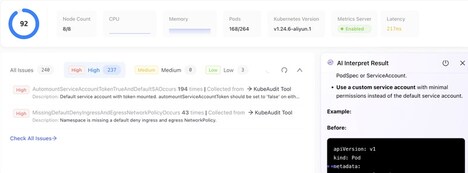
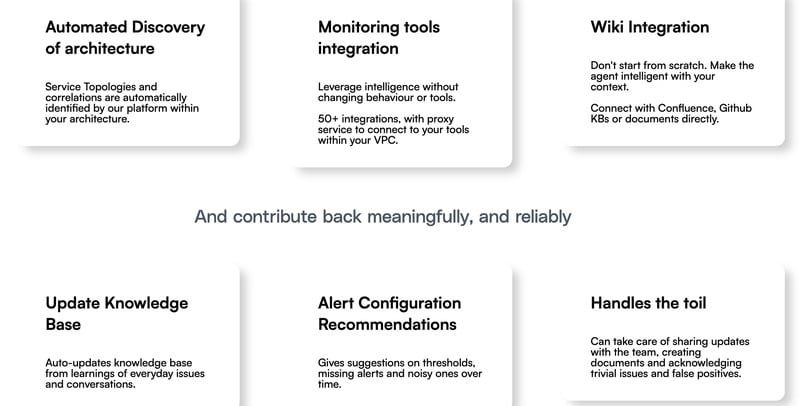
DrDroid is an AI-powered assistant designed to support engineering teams during production incidents. It assists on-call engineers by diagnosing and resolving issues more efficiently, ultimately helping reduce mean time to recovery (MTTR) and minimizing downtime.
By automating parts of incident response and surfacing relevant context, DrDroid alleviates the burden of alert fatigue that often affects operations teams. The tool acts as an intelligent collaborator, continuously learning from past incidents to improve response accuracy and speed. For organizations managing complex systems, DrDroid offers a data-driven approach to operational reliability, streamlining workflows and promoting faster decision-making. Its integration into existing infrastructure monitoring and communication tools makes it a practical solution for modern DevOps and site reliability engineering environments.
Image Credit: DrDroid
What Makes This Trend Stand Out
- AI-driven Incident Management
- The rise of AI-driven tools like DrDroid is transforming traditional incident management by reducing human error and improving response times during production issues.
- Intelligent Collaboration Tools
- AI tools that act as intelligent collaborators offer enhanced decision-making capabilities and streamline the workflow of engineering teams during crises.
- Automated Operational Reliability
- Automation in operational reliability is emerging as a key trend, with AI assistants minimizing downtime and optimizing system performance through continuous learning.
Sectors Adopting This
- Devops Solutions
- The integration of AI assistants into DevOps offers opportunities to enhance system monitoring and increase the efficiency of production environments.
- Site Reliability Engineering
- AI-enabled incident assistants enhance site reliability engineering by automating response tasks and reducing the burden of alert fatigue for engineers.
- Infrastructure Monitoring Technology
- As AI technologies like DrDroid integrate with existing infrastructure monitoring tools, they signify a shift towards more responsive and data-driven operational strategies.