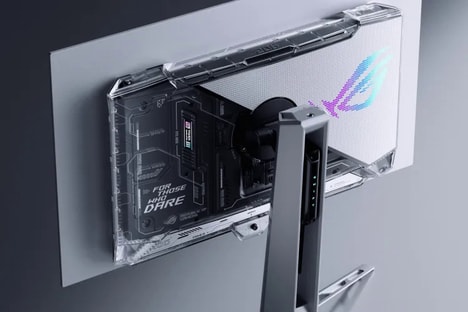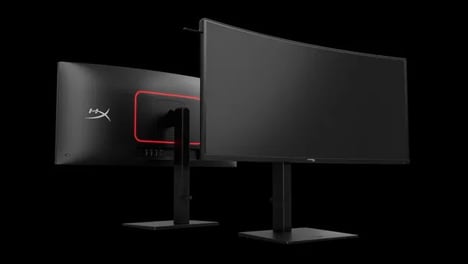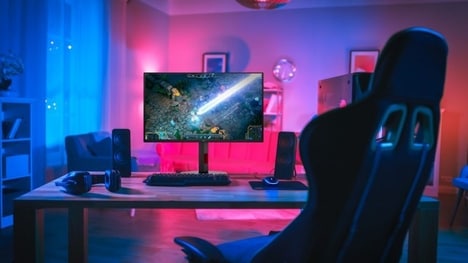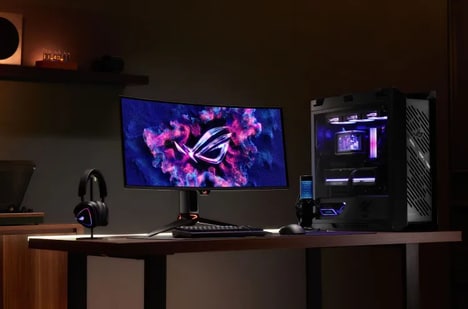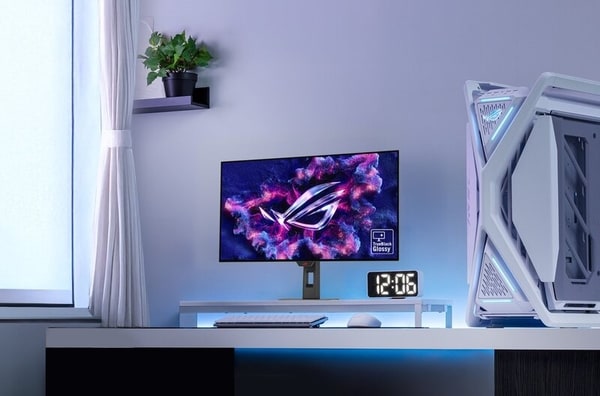
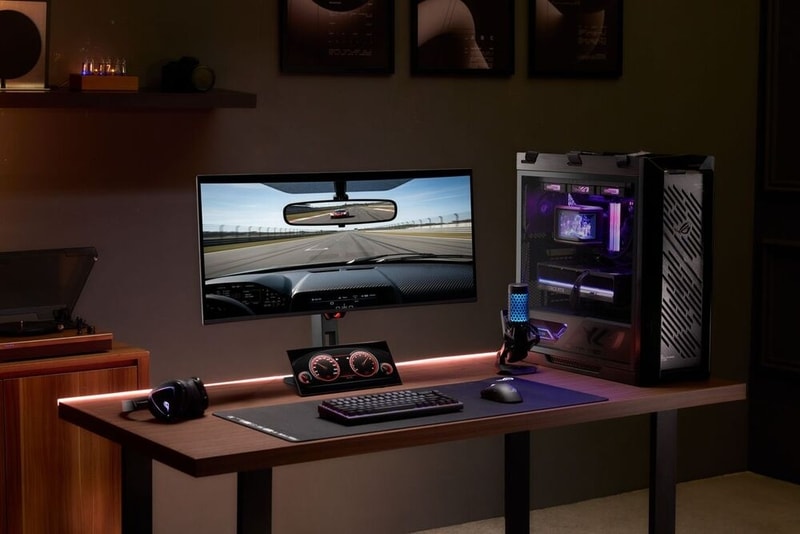
These new ASUS ROG Strix monitors have been announced as the latest addition to the brand's gaming-ready line up of multimedia equipment that's engineered with immersive visual experiences in the spotlight. The monitors include the ROG Strix OLED XG34WCDMS and the ROG Strix XG129C, which work in different ways but will both greatly enhance the user experience.
The ROG Strix OLED XG34WCDMS boasts a 34-inch WQHD curved RGB Tandem QD-OLED panel with a 280Ha refresh rate to easily support fast-paced gaming. The ROG Strix XG129C is engineered to sit below an existing monitor and provide additional visual support to gamers related to gameplay or computer functionality.
The new ASUS ROG Strix monitors offer impressive color gamut coverage to further enhance the gameplay experience.
Image Credit: ASUS
Key Themes Behind This Trend
- High-refresh Curved QD-OLED Panels
- Adoption of 280Hz-class curved QD-OLED displays introduces potential for ultra-smooth visual pipelines and low-latency rendering systems tailored to competitive gaming.
- Auxiliary Under-monitor Displays
- Secondary monitors designed to mount beneath primary screens create opportunities for integrated HUDs and real-time telemetry overlays that consolidate gameplay and system information.
- Expanded Color-gamut Immersive Displays
- Wider color coverage and OLED contrast characteristics open avenues for content-aware color grading tools and perceptual enhancement engines that heighten visual realism.
Where This Applies
- Gaming Hardware and Peripherals
- High-performance monitors shift hardware differentiation toward combined display-software ecosystems that optimize refresh, latency, and visual fidelity for end-to-end gaming experiences.
- Esports Performance and Coaching
- Competitive teams and coaching platforms stand to benefit from specialized displays that integrate split telemetry and analytics feeds to refine player decision-making under tournament conditions.
- Content Creation and Live Streaming
- Streamers and video producers can leverage advanced color and secondary-display setups for immersive overlays, accurate color workflows, and enhanced audience engagement formats.