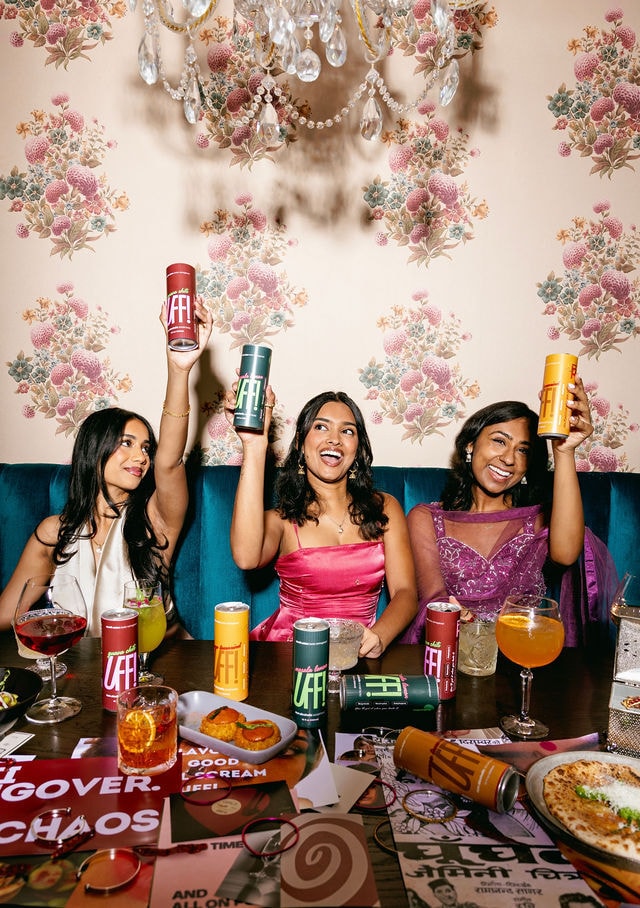
Spritz culture has found a new generation of drinkers looking for light, bubbly, refreshing beverages to sip, and UFF! is a zero-proof South Asian spritz built on the six-taste flavor philosophy. According to this approach, well-balanced drinks and dishes touch on multiple tastes—sweet, sour, salty, pungent, bitter, and astringent—to deliver layers of flavor and satisfaction that do something for the spirit, not just the taste buds.
UFF!'s lightly carbonated, non-alcoholic spritz is made with real fruit, real spice and real cane sugar, and no artificial sweeteners or preservatives. This brand was built on the notion that sober can be sexy, so UFF! is made to look as good on a bar cart and taste just as complex in the glass as anything with alcohol in it.
As part of its crowdfunding campaign on Kickstarter, UFF! introduced Tamarind Mango and teased two more flavors still in development.
Part of the cluster
Occasion Beverages
Drinks are being positioned around specific desired effects and usage moments
Explore the cluster
What Makes This Trend Stand Out
- Culinary Zero-proof Cocktails
- Non-alcoholic beverages with complex culinary flavor systems create space for premium drinking rituals that rival alcohol in taste, presentation, and social appeal.
- South Asian Flavor Modernization
- Traditional ingredients like tamarind, mango, and warming spices are being reframed for contemporary refreshment formats, opening new relevance for culturally rooted taste profiles.
- Wellness-driven Spritz Culture
- Light carbonation, real ingredients, and lower-intensity sipping experiences reflect a growing preference for beverages that feel celebratory without compromising mindful consumption.
Sectors Adopting This
- Non-alcoholic Beverages
- Sophisticated zero-proof products are expanding the category beyond simple substitutes by emphasizing layered flavor, adult packaging, and premium occasions.
- Functional Refreshments
- Taste philosophies tied to balance and sensory satisfaction suggest new beverage formats that connect refreshment with emotional and experiential wellness.
- Food and Beverage Crowdfunding
- Kickstarter-backed drink launches provide early validation for niche cultural concepts, allowing emerging brands to test demand before scaling distribution.