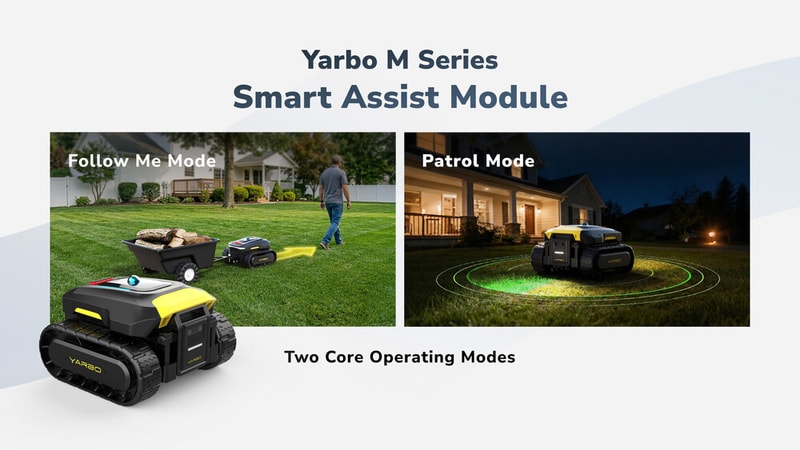
The Yarbo Open Platform is a strategic initiative that is currently under development and planned for release in early 2027. This venture will open the brand's modular yard robotics system to third-party developers and smart home ecosystems through a combination of software tools and hardware expansion interfaces.
The Yarbo Open Platform includes an Open API for external connectivity, an SDK for custom feature development, a no-code Automation Editor for visual workflow creation, and a standardized hardware interface called CoreBridge that provides access to mechanical mounting points, power, and data connections for user-built or developer-built modules.
In essence, the Yarbo Open Platform transforms what could otherwise be a closed, single-purpose yard robot into a flexible platform that can adapt to specific property needs over time.
Image Credit: Yarbo
Key Themes Behind This Trend
- Modular Robotics Platforms
- Modular robotics platforms that separate core mobility from add-on modules can support a growing marketplace of specialized yard tools and sensor payloads.
- Open-api Ecosystems
- Open APIs connecting robotics to third-party services allow integrated data exchange between property management systems, weather services, and automation providers.
- No-code Automation for Physical Devices
- No-code automation editors for physical devices enable non-technical users to assemble complex workflows linking environmental triggers to mechanical actions.
Where This Applies
- Smart Home Integrations
- Smart home ecosystems gain richer physical capabilities as yard robotics become first-class endpoints within broader automation and monitoring platforms.
- Lawn and Landscape Services
- Landscape service providers can utilize modular robotics to offer subscription-based, on-site maintenance and specialized inspections without permanent fleet expansion.
- Robotics Hardware Manufacturing
- Standardized hardware interfaces encourage component makers to design interoperable modules for power, data, and mounting, fostering a component-level supply chain.