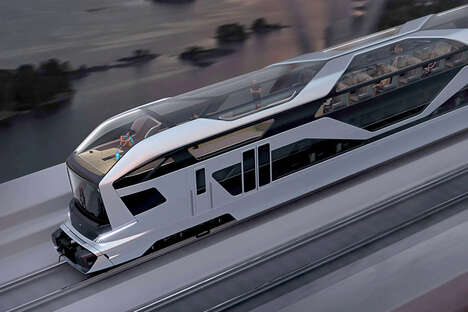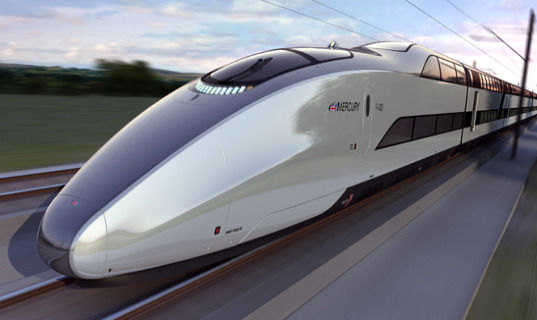

Central Japan Railway Company has recently announced a huge new undertaking: the creation of the world's fastest train line between Tokyo and Nagoya.
With a staggering estimated cost of $64 billion, this unbelievable commuter train will have the ability to make the 90-minute journey (via the existing 178-mph train it has now) in just over half that time. To become the world's fastest train, this new line will use a futuristic magnet system that actually lifts the train off the rails to reduce drag.
Why This Trend Is Growing
- Magnetic Train Technology
- Developing magnetic train technology for high-speed transportation can disrupt the transportation industry by reducing travel time and increasing efficiency.
- Hyperloop Transportation System
- Exploring the development of the Hyperloop transportation system can disrupt the transportation industry with the potential to travel at supersonic speeds and reduce travel time between distant cities.
- Autonomous Train Technology
- Investing in autonomous train technology can disrupt the transportation industry by increasing safety, reducing labor cost, and improving efficiency.
Industries Being Reshaped
- Transportation
- The transportation industry can leverage magnetic train technology, the Hyperloop transportation system, and autonomous train technology to revolutionize railway transportation.
- Urban Development
- Developing high-speed railway transportation can disrupt urban development by reducing the distance between major cities and increasing accessibility to remote regions.
- Construction
- Developing high-speed railway transportation requires extensive construction and can disrupt the traditional construction industry by demanding innovative construction ideas and a new type of workforce.