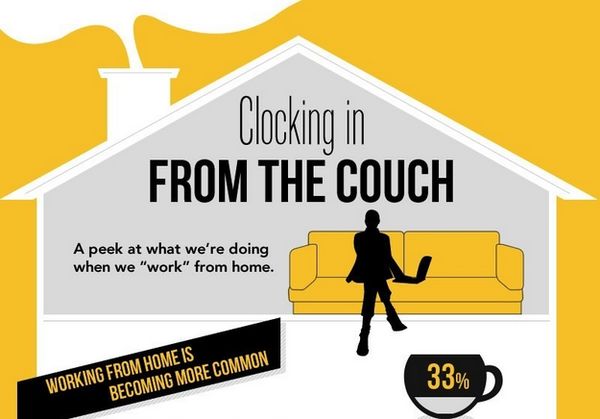


The 'Work From Home Fridays' Infographic makes a strong case that employers should let their employees work from home on some days.
There are many benefits to letting employees stay home including increased productivity. The average commute is 45 minutes which adds up to 1.5 hours per days. Imagine if that time was spent working and not sitting in traffic. Working from home is also better for the environment because that means less pollution from vehicles. Flexible work hours also increase worker motivation. In fact 25 percent of workers who occasionally stay at home report having less stress and 73 percent say they eat healthier when working from home.
Businesses should pay attention to the Work From Home Fridays Infographic because it could help them make their business better.
What Makes This Trend Stand Out
- Remote Work Productivity
- Businesses can explore ways to increase work productivity for remote employees by leveraging technology and promoting work-life balance.
- Virtual Collaboration Tools
- Development of cloud-based tools to support seamless virtual collaboration meetings, remote presentations and file-sharing to make remote work more efficient and convenient.
- Eco-friendly Work Practices
- Companies have the opportunity to make their businesses more sustainable by encouraging remote work, which reduces carbon emissions from transportation.
Sectors Adopting This
- Technology
- Technology companies can provide innovative ways to enhance remote work experiences, such as artificial intelligence-powered virtual assistants to increase productivity.
- Real Estate
- Real estate companies can change their operations to facilitate the demand for remote employees wanting flexible office space.
- Environmental Services
- Environmental companies can develop eco-friendly products and software to encourage remote work practices and reduce carbon footprint.