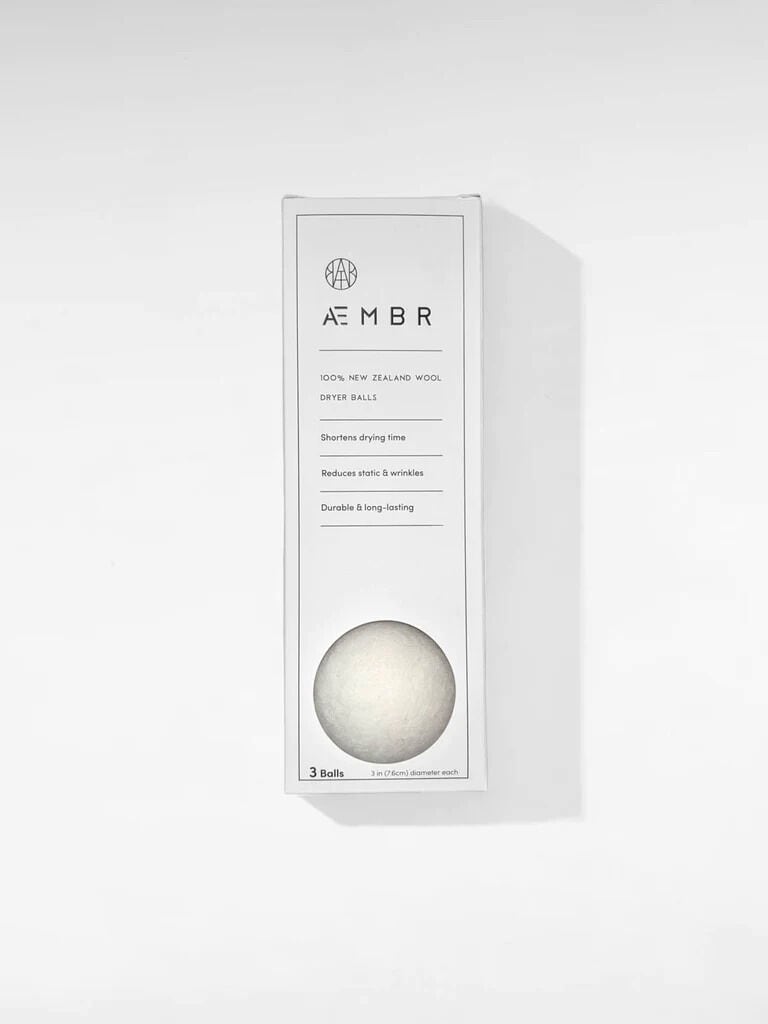
AEMBR Wool Dryer Balls present a worthwhile alternative to conventional dryer sheets and fabric softeners. Crafted from 100% responsibly sourced New Zealand wool, these dryer balls are biodegradable, fragrance-free, and dye-free. Thus, they ensure a more sustainable and effective alternative while also emphasizing safety, as well.
The primary function of AEMBR Wool Dryer Balls is to fluff and separate laundry during drying in order to facilitate better air circulation and reduce drying time, static cling, and wrinkles. Each pack includes three dryer balls capable of providing softness and freshness for up to 1000 loads. They are designed to gently lift and separate clothes, promoting even drying without the need for chemical-laden products. Additionally, the wool used in these dryer balls is RWS certified, which points to the brand's commitment to ethical and sustainable production practices.
Image Credit: AEMBR
Key Themes Behind This Trend
- Eco-friendly Laundry Solutions
- Eco-friendly laundry solutions are gaining momentum as consumers turn to biodegradable and non-toxic products for fabric care.
- Chemical-free Home Products
- The demand for chemical-free home products is on the rise, providing safer alternatives to traditionally toxic household items.
- Sustainable Home Goods
- Sustainable home goods like 100% responsibly sourced wool dryer balls are appealing to environmentally conscious consumers.
Where This Applies
- Eco-friendly Household Products
- Eco-friendly household products cater to sustainability-focused consumers seeking greener alternatives for everyday tasks.
- Green Manufacturing
- Green manufacturing adopts sustainable practices and responsibly sourced materials to minimize environmental impact.
- Textile Innovations
- Textile innovations include the development of products like RWS certified wool dryer balls that promote ethical production.