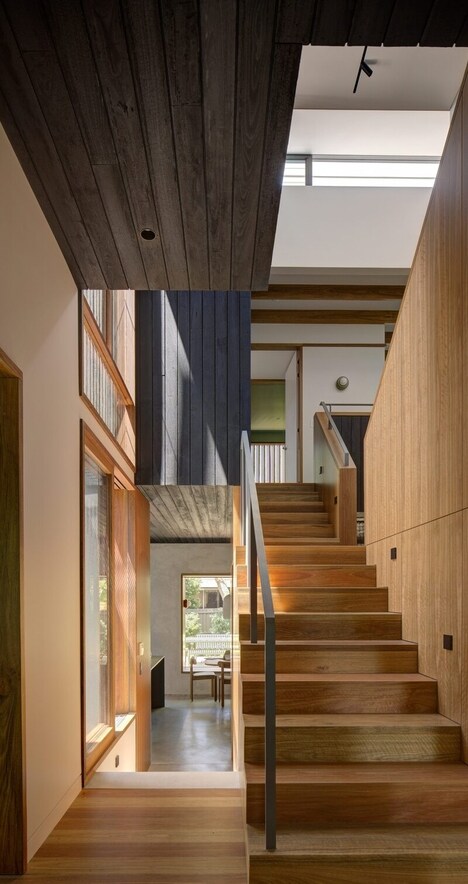
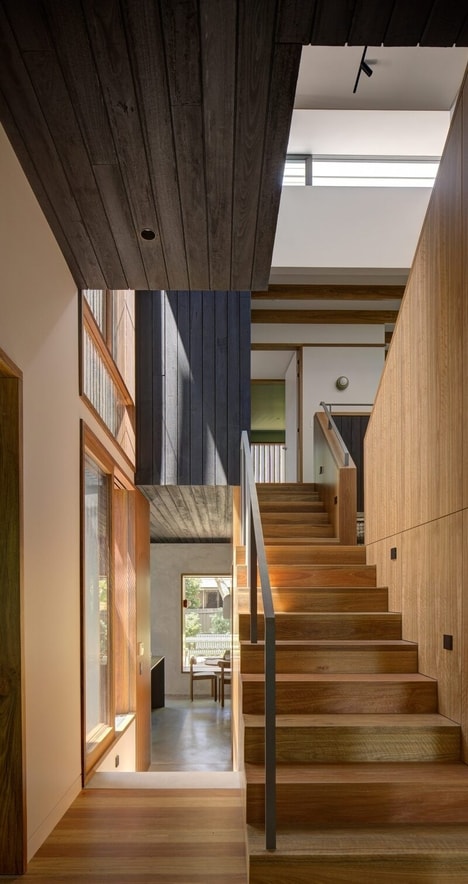
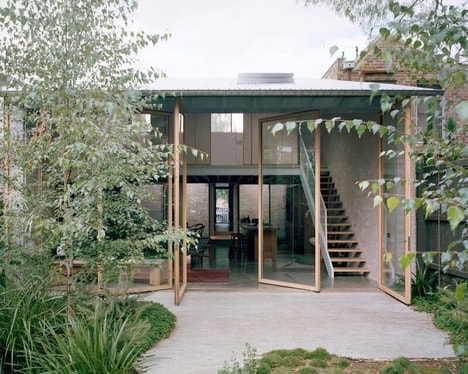
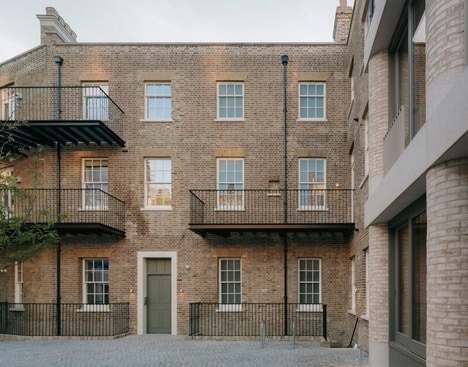
Woods Bagot completed the Younghusband Woolstore Redevelopment in Melbourne’s Kensington district. This adaptive reuse project transforms more than 17,000 square meters of underutilized nineteenth-century industrial fabric into a mixed-use community precinct.
The firm treated the existing redbrick structures, saw-tooth roof profile, and weathered ghost signage as active spatial and material assets capable of supporting contemporary programs with minimal intervention. The architects adopted what they describe as a "light touch" methodology, adding only what is strictly necessary for accessibility, safety, and thermal performance and removing material only when no other option existed.
Woods Bagot's approach to the redevelopment and its reuse of materials has reportedly achieved "an 84% reduction in embodied carbon compared to similar reference buildings." This is noted to be "equivalent to 11,335,000kg in carbon savings."
Image Credit: Trevor Mein
Why This Trend Is Growing
- Adaptive Reuse Architecture
- Repurposed heritage structures with minimal intervention reveal opportunities to deliver contemporary mixed-use programs while preserving cultural and material assets.
- Carbon-conscious Retrofits
- Buildings retrofitted to dramatically lower embodied carbon suggest scalable models for sustainability-led redevelopment benchmarks.
- Material-first Design
- Design approaches that treat existing fabric and signage as active components point toward product and service offerings centered on reclaimed-material integration.
Industries Being Reshaped
- Real Estate Development
- Demand for mixed-use precincts retaining historic character indicates potential for investment vehicles that value long-term carbon performance alongside rental yields.
- Construction Materials Recycling
- Growing reuse of redbrick and reclaimed elements creates market space for suppliers and processors specialized in certifiable, low-embodied-carbon material streams.
- Urban Planning and Public Realm
- Municipalities prioritizing adaptive reuse are reshaping zoning and infrastructure priorities toward compact, community-oriented developments with lower lifecycle emissions.