
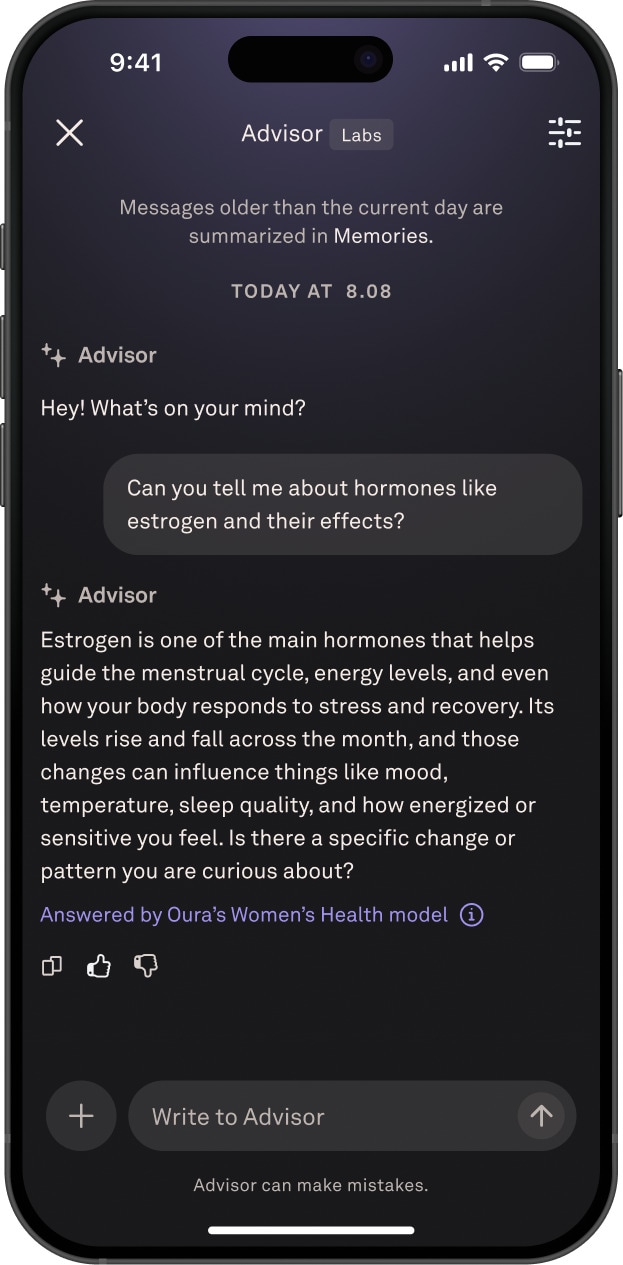
Oura debuted its proprietary AI model, Advisor, last year to help customers make more sense of their personal data and biometrics, and now, the smart ring company is introducing a dedicated women's health AI model to provide insight into cycle changes, pregnancy, and midlife. “This custom model is a fundamental shift in how we responsibly deploy AI in health to meet the needs of our members,” said Ricky Bloomfield, MD, chief medical officer at Oura. “Women’s health is too complex—and too often overlooked—to rely on one-size-fits-all systems."
The new AI mode, now in Oura Labs, can answer questions related to the full reproductive health spectrum, from early menstruation through menopause. Women who opt to test the experimental model will play a role in shaping its development.
What's Driving This Trend
- Personalized Reproductive AI
- A shift toward individualized cycle- and fertility-aware models that interpret personal biometrics could enable tailored insights across the reproductive timeline.
- Lifecycle Biometrics Analysis
- Continuous biometric monitoring tied to life-stage models has the potential to reveal predictive markers for menstruation, pregnancy progression, and menopausal transitions.
- Participatory AI Model Development
- User-involved experimental deployments that incorporate member feedback into training data may accelerate model accuracy and trust for sensitive health domains.
Who This Affects Most
- Wearable Health Technology
- Smart rings and other sensors combined with specialized AI could disrupt how wearable manufacturers differentiate products by offering life-stage–specific analytics.
- Digital Therapeutics
- AI-driven, reproductive-focused guidance layered into digital treatment platforms might transform symptom management and preventive care planning.
- Women's Healthcare Services
- Clinics and telehealth providers integrating personalized AI insights could reshape diagnostic workflows and patient education across reproductive and midlife care.