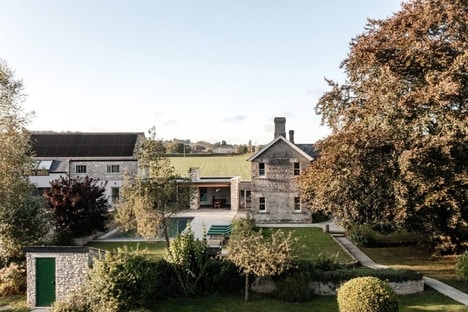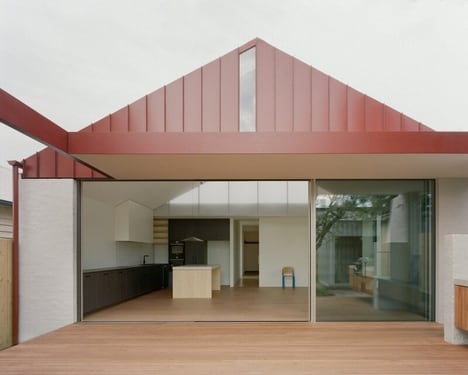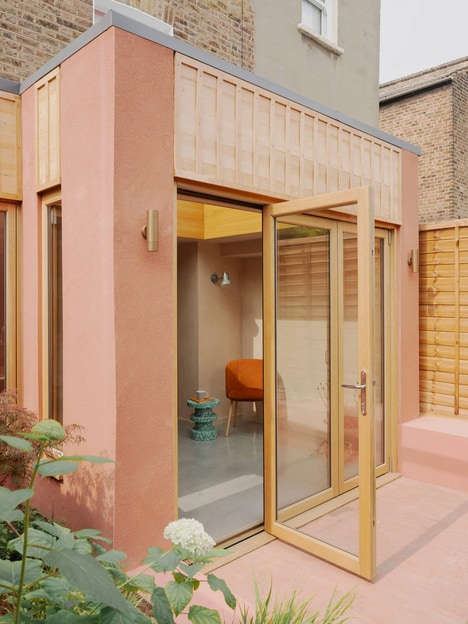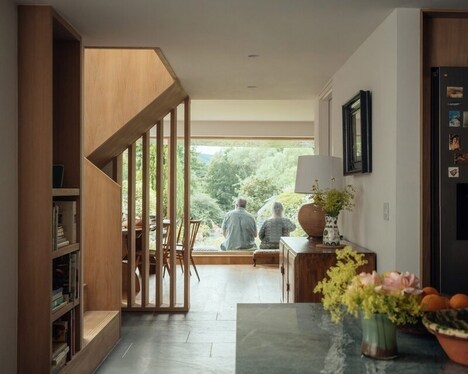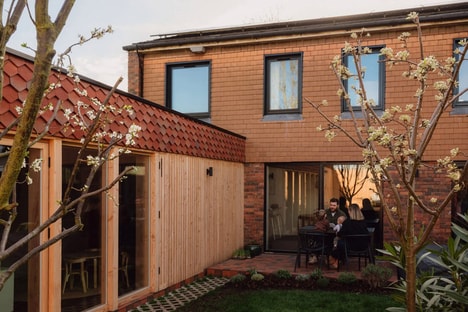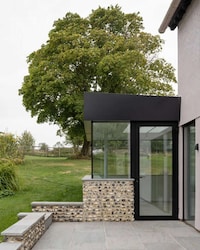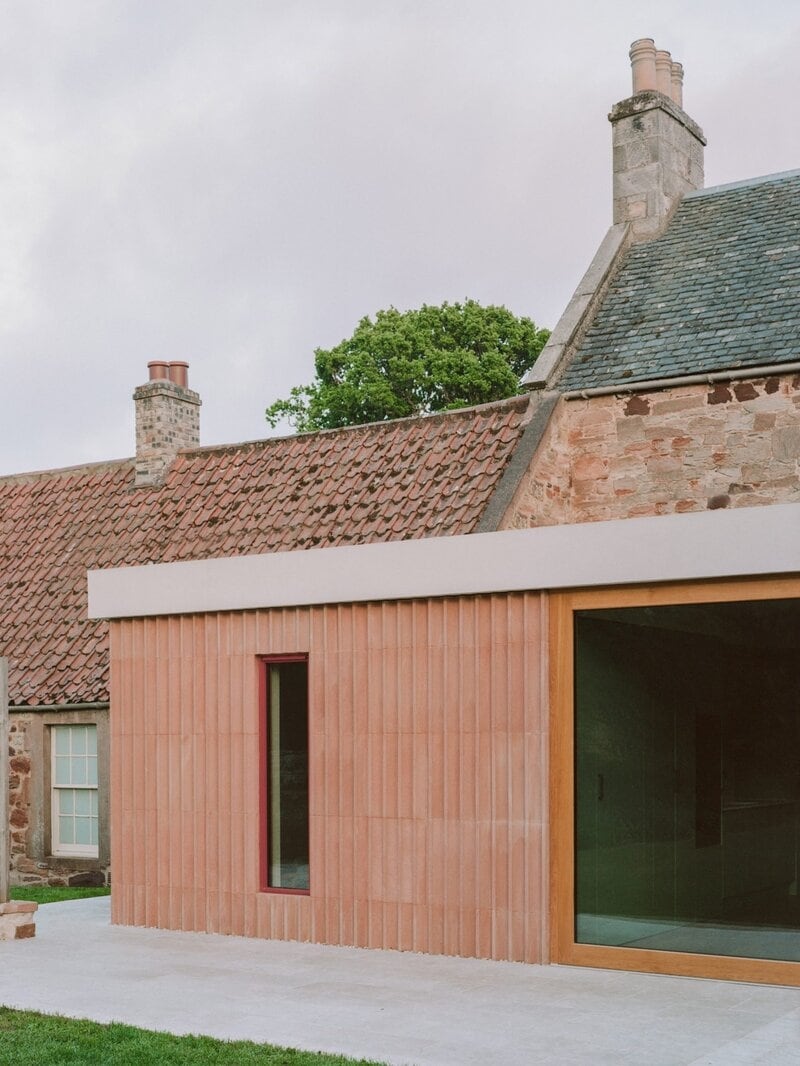
Pend Architects reimagined the rear elevation of Whitberry House, a listed Georgian farmhouse in East Lothian, by replacing a series of fragmented additions with a cohesive single-storey extension. The new rear features a fluted, blush-toned precast stone wall paired with full-height cherry-framed glazing that wraps around a flush corner. “Whitberry presented an opportunity for us to become the latest part of an ongoing story of a special building,” said project architect Ben MacFarlane, describing their approach to sensitive restoration.
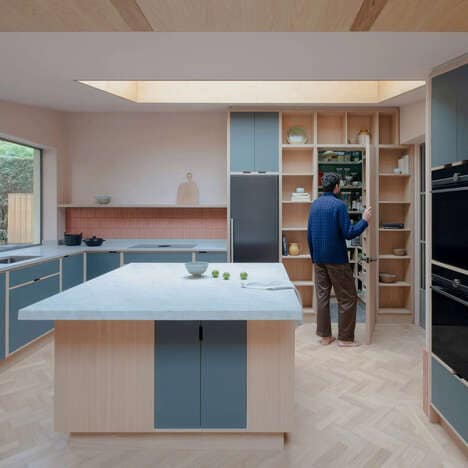
The kitchen has been relocated to connect with both the garden and an interior courtyard. A vaulted skylight brings daylight deep into the floor plan, while an air-source heat pump powers radiant underfloor heating for improved energy performance. With its balance of historic character and contemporary flow, the extension serves as both a visual anchor and a functional heart for family life.
Image Credit: Lorenzo Zandri
Why This Trend Is Growing
- Heritage-modern Integration
- Fluted farmhouse extensions showcase the potential for architectural designs that harmoniously blend historical aesthetics with contemporary functionality.
- Sustainable Home Features
- Incorporating eco-friendly technologies like air-source heat pumps and daylight-maximizing design elements reflects a growing trend in sustainable home building practices.
- Open Indoor-outdoor Living
- Architectural plans prioritizing seamless transitions between indoor and outdoor spaces highlight the increasing demand for designs that enhance connectedness with nature.
Industries Being Reshaped
- Architecture and Design
- The emphasis on merging historical charm with modern design principles is revolutionizing architectural approaches to listed property renovations.
- Sustainable Building Technologies
- Innovations in renewable energy systems and efficient design elements are reshaping the landscape of environmentally conscious construction industries.
- Interior Design
- Adaptation of open-plan concepts merging indoor and outdoor areas demonstrates a shift towards more fluid and adaptable living environments in interior design practices.