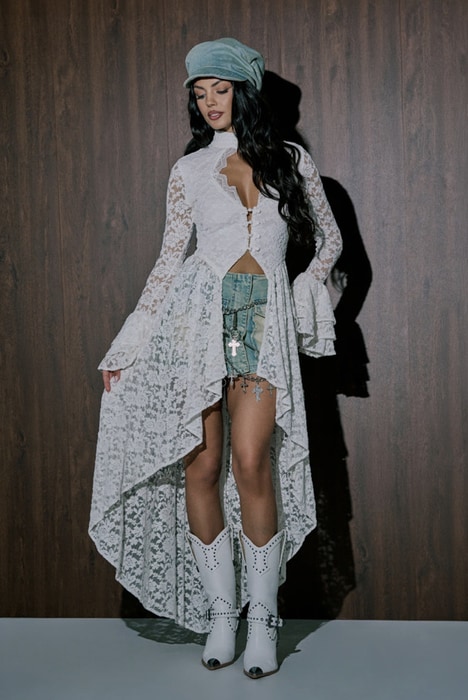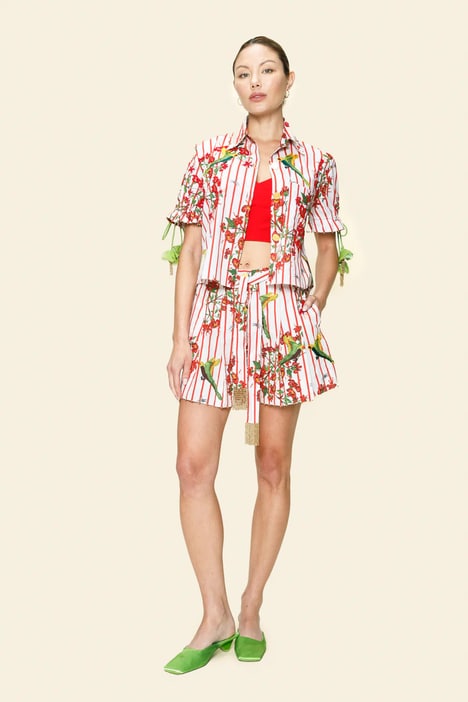
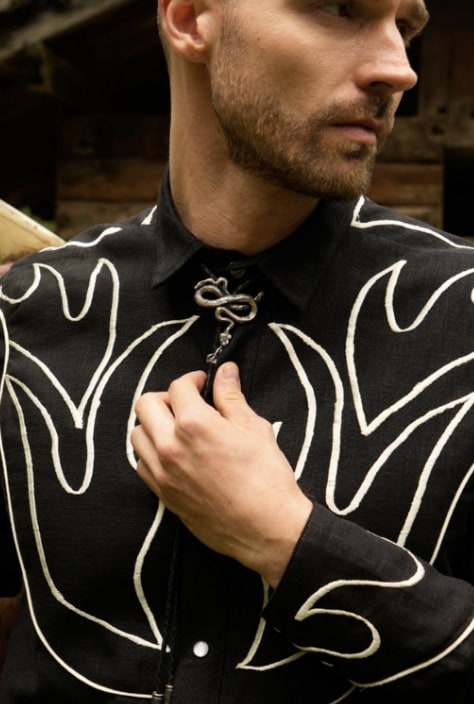
Amor & Rosas — a Mexico City-based ethical fashion brand — brought its Western Collection to Los Angeles for a two-day pop-up at The Row DTLA on April 25th and 26th. The presentation featured 35 hand-embroidered pieces that draw inspiration from the contrast between the northern Mexican desert's raw energy and the traditional textile language of Zinacantán, a Tzotzil Maya community in Chiapas.
Amor & Rosas' production approach rests on a co-authorship model where the artisan women who execute the embroidery using foot-pedal sewing machines are credited by name and paid a living wage. This ensures that each garment is traceable to its maker.
The Western Collection by Amor & Rosas boasts a color palette of terracotta, raw linen, black, red, lavender, and gold.
Image Credit: Amor & Rosas
Why This Trend Is Growing
- Ethical Traceable Artisanal Fashion
- Garments with named artisan attribution and living-wage sourcing create new provenance-driven value propositions that can redefine consumer willingness to pay for authenticity.
- Cultural Hybridization in Fashion
- Designs that fuse regional textile languages with broader Western aesthetics open pathways for differentiated product storytelling and niche market segmentation.
- Designer-artisan Co-authorship Models
- Collaborative creation frameworks that formally credit craftswomen shift intellectual property and branding narratives toward shared authorship and social capital.
Industries Being Reshaped
- Fashion Retail
- Pop-up activations featuring ethical, traceable capsules spotlight alternative retail formats that can capture premium-conscious urban consumers.
- Supply Chain Traceability Tech
- Item-level tracking systems tied to artisan identities and wage data present opportunities to embed verifiable social impact credentials into product records.
- Luxury Textile Manufacturing
- Hand-embroidered, small-batch textiles with localized craft provenance suggest premium manufacturing niches that command scarcity-driven pricing.