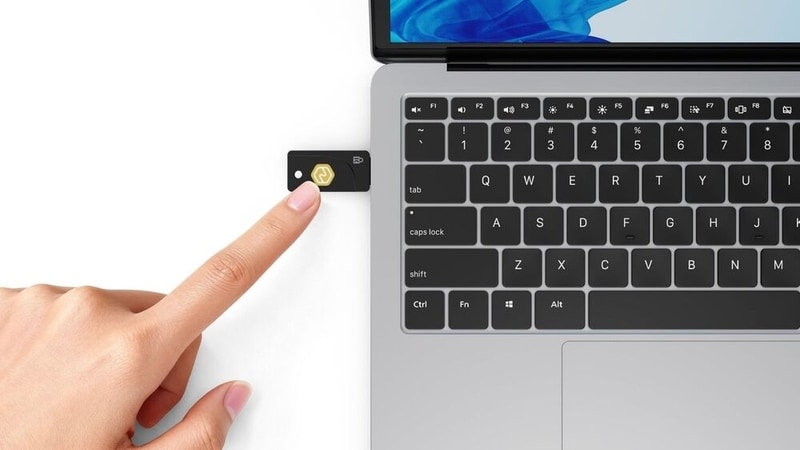
The Kensington VeriMark™ NFC+ USB-A Security Key is a hardware-based solution for professionals to incorporate into their security protocol that will provide peace of mind when multi-factor authentication is required. The key works by being plugged into a USB-A port on a desktop or laptop computer to add in authentication capabilities that are phishing-resistant. The device also features NFC compatibility to work with smartphones and doesn't require any drivers or apps to be used.
The Kensington VeriMark™ NFC+ USB-A Security Key maintains a durable construction that has an IP68 rating to effectively resist water, dust and crushing. The compact design of the key means it can be positioned onto a keychain to ensure it's always on hand.
Image Credit: Kensington
Key Themes Behind This Trend
- Hardware-based Multi-factor Authentication
- Physical authentication tokens create opportunities to shift high-security access models away from software-only methods toward tamper-resistant, phishing-resistant hardware verification.
- Nfc-integrated Security Keys
- Near-field communication compatibility opens possibilities for seamless cross-device authentication that unifies desktop and mobile security credentials without additional apps or drivers.
- Ruggedized Portable Auth Devices
- Durable, compact form factors with IP68 ratings suggest a market for always-carried authentication tools designed for field work and harsh environments.
Where This Applies
- Enterprise IT Security
- Organizations could rearchitect identity frameworks to incorporate hardware tokens as primary factors, reducing reliance on vulnerable password and SMS channels.
- Mobile Device Management
- Mobile fleet administrators may benefit from integrating driverless NFC keys into provisioning workflows to standardize secure enrollment and access across smartphones and laptops.
- Manufacturing and Product Design
- Product teams have room to innovate around materials, miniaturization, and ruggedization to produce authentication hardware that balances durability, usability, and cost.