
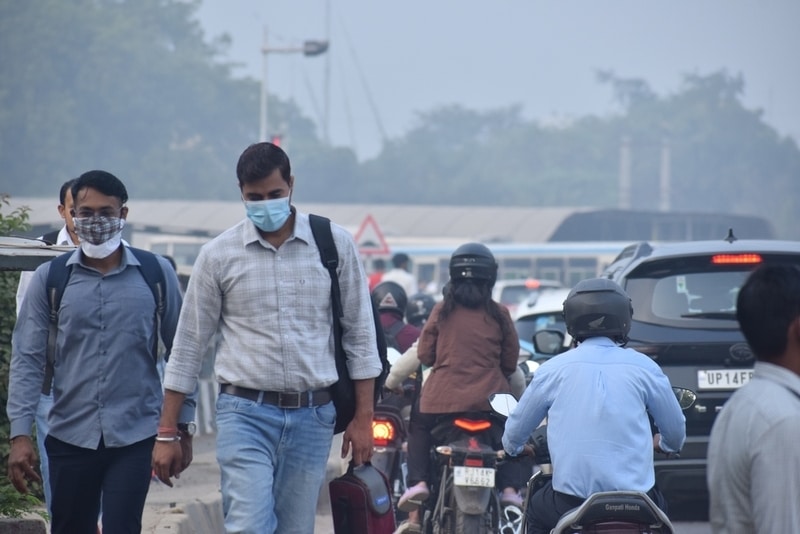
The Delhi government announced an expansion of its urban air monitoring network with six new tracking stations placed across key institutions and public sites. Led by Chief Minister Rekha Gupta, the initiative focused on tightening the city’s data backbone for pollution control. The added stations were designed to feed localized, real-time readings into existing systems, enabling more targeted interventions in high-risk zones.
The new units were slated for locations including JNU, IGNOU, the ISRO Earth Centre, the Commonwealth Sports Centre, and NSUT’s West Campus, complementing 40 continuous monitoring stations already operating under multiple agencies. These stations measure pollutants such as particulate matter and gases, delivering standardized data that regulators can compare across neighborhoods. The rollout aligned with directions from the Commission for Air Quality Management and supports existing enforcement, inspection, and public-transport upgrades.
Image Credit: Shutterstock / Sudarshan Jha
What Makes This Trend Stand Out
- Real-time Data Integration
- Integrating real-time air quality data from multiple monitoring stations enhances precision in identifying pollution hotspots and tailoring mitigation strategies.
- Localized Pollution Interventions
- Localized interventions are transformed by the acquisition of granular air quality data, allowing for precise targeting of high-risk areas with specific regulatory actions.
- Standardized Environmental Metrics
- The deployment of standardized measurement systems across different areas supports consistent and comparable environmental data, crucial for effective policy-making and public awareness.
Sectors Adopting This
- Environmental Technology
- The expansion of air quality monitoring networks represents significant growth for environmental tech companies focusing on sensors, data analytics, and smart systems.
- Urban Planning
- Urban planning industries can capitalize on developments in air quality tracking, as accurate data feeds into infrastructure decisions aimed at pollution control.
- Public Health
- Public health sectors gain from enhanced air quality monitoring, as access to precise pollution data is critical for health advisories and preventative healthcare measures.