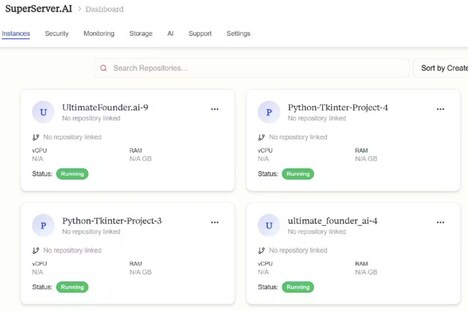
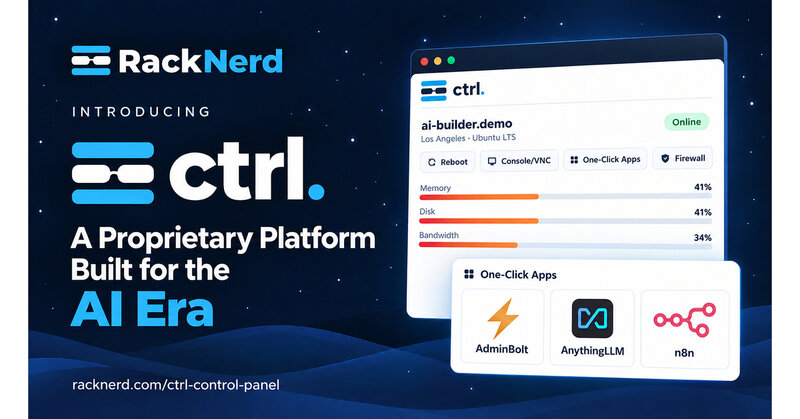
RackNerd is expanding virtual private server management with 'ctrl,' a proprietary dashboard that lets customers run servers, add an optional firewall, and spin up AI-linked apps all in one place. Built for the company's VPS lineup, ctrl keeps routine administration in one interface, including browser-based console access and operating-system changes.
The one-click catalog includes n8n and AnythingLLM, turning a fresh machine into a working automation or AI setup with minimal manual setup. The firewall filters inbound traffic before it reaches the VPS, adding a network-side layer that users can toggle while still retaining full root access.
For providers, ctrl turns unmanaged VPS hosting into a convergence play, where compute, deployment, and basic protection share a single workflow. Hosts offering only raw server access now have to explain how quickly a blank server becomes a usable AI or automation environment.
Image Credit: RackNerd
What Makes This Trend Stand Out
- Unified VPS Control
- Consolidated dashboards reduce the friction between server provisioning, security configuration, and application deployment, creating differentiation in a historically fragmented hosting experience.
- One-click AI Deployment
- Prebuilt catalogs for AI and automation tools make infrastructure more accessible to non-specialist users, shifting value from raw compute toward instant productivity environments.
- Network-side Security Toggles
- Optional firewall controls embedded into VPS workflows introduce lightweight protection as a default-adjacent feature, expanding the role of hosting providers in managed security.
Sectors Adopting This
- Cloud Hosting
- VPS providers are evolving from infrastructure vendors into platform enablers as integrated management layers make unmanaged servers feel more application-ready.
- AI Software
- LLM and automation applications gain broader adoption when deployment is bundled into hosting interfaces, reducing setup complexity for small teams and solo operators.
- Cybersecurity
- Built-in traffic filtering within server dashboards creates new demand for simple, provider-managed security controls that sit between raw infrastructure and full managed services.