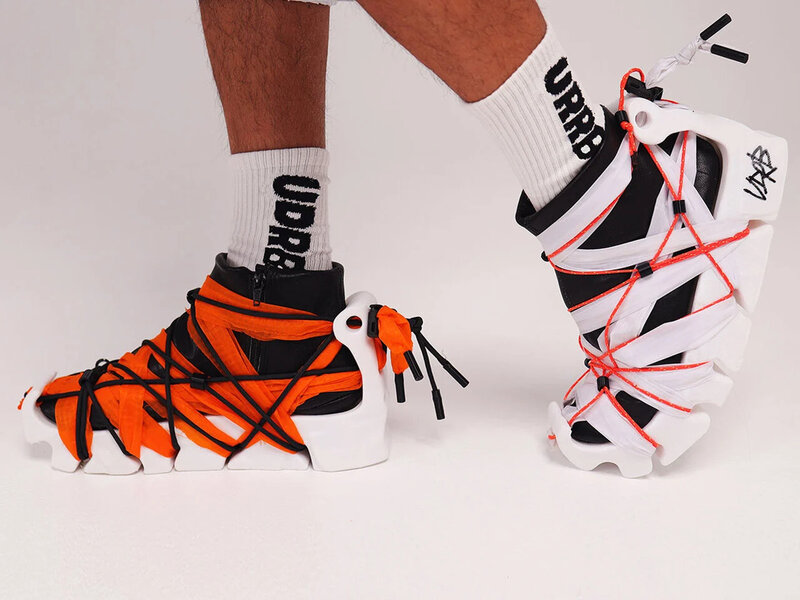
UDBR sneakers are a modular footwear concept by designer Daniyar Uderbekov that replaces permanent adhesive construction with a fully disassemblable system inspired by traditional Central Asian Makhsi and Ichigi footwear. The design consists of three primary components: a 3D-printed TPU sole, a leather sock-like inner boot, and a rope-based fastening system that secures the structure without glue. Each element can be separated and replaced independently, allowing individual parts to be repaired or renewed rather than discarding the entire shoe.
The thermoplastic polyurethane sole is designed for cushioning and flexibility while remaining reproducible through 3D printing using recyclable TPU when replacement becomes necessary. A leather inner boot wraps the foot in a soft, sock-inspired construction, while the exposed rope lacing serves as both the structural fastening method and a defining visual feature.
Image Credit: Daniyar Uderbekov
Why This Trend Is Growing
- Modular Footwear
- Component-based sneaker systems create market space for products that extend lifespan through replaceable soles, uppers, and fastening elements.
- Adhesive-free Assembly
- Glue-free construction enables easier disassembly, repair, and recycling, challenging conventional footwear manufacturing models built around permanent bonding.
- 3d-printed Soles
- Reproducible TPU sole components introduce localized production and customized replacement pathways that reduce waste and inventory complexity.
Industries Being Reshaped
- Footwear
- Repairable sneaker architectures present an alternative to disposable product cycles by shifting value toward durability, maintenance, and part renewal.
- Sustainable Fashion
- Circular design principles gain practical relevance through apparel and accessory products engineered for separation, refurbishment, and material recovery.
- Additive Manufacturing
- 3D printing technologies support flexible production of functional consumer goods where individual components can be replicated on demand.