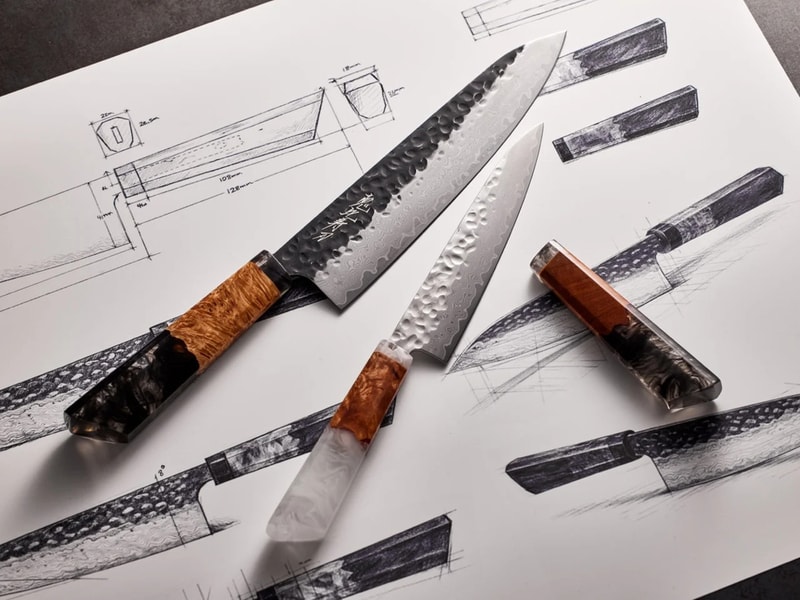
The TSUKI chef's knife features a 210 mm gyuto blade forged with a VG-10 steel core wrapped in 67 layers of Damascus steel. Produced by JP-crafts, the knife combines a hammered upper blade with a patterned cutting edge inspired by the moon's surface and reflected light. The handle pairs Sakura birch with translucent resin, creating a contrasting finish while maintaining a lightweight 150-gram construction suited to everyday food preparation. The double-beveled edge is sharpened in Sakai, Osaka, drawing on the city's long-established knife-making tradition.
The knife is packaged in a custom paulownia wood box secured with a traditional Mizuhiki plum knot and finished with an Echizen washi paper label. The gyuto is designed for general kitchen tasks, including slicing vegetables and preparing meat, while the hammered blade texture helps reduce food sticking during use.
Image Credit: JP-crafts
What Makes This Trend Stand Out
- Heritage Kitchen Tools
- Centuries-old production methods combined with modern performance materials create premium cookware that appeals to consumers seeking authenticity in everyday culinary products.
- Regional Material Storytelling
- Locally sourced woods, papers, knots, and forging traditions give functional goods a stronger sense of place, supporting differentiation in crowded luxury home markets.
- Artisanal Utility Design
- Decorative finishes such as Damascus patterning, hammered textures, and translucent handles transform practical tools into collectible objects without sacrificing daily usability.
Sectors Adopting This
- Kitchenware
- Premium knives and cooking tools are being elevated through craft-led engineering, creating space for high-margin products that blend professional performance with visual distinction.
- Luxury Goods
- Functional objects with ceremonial packaging and regional provenance extend luxury beyond fashion and jewelry into everyday rituals like cooking and hosting.
- Craft Manufacturing
- Traditional workshops can gain relevance through collaborations that pair inherited techniques with contemporary materials, lightweight construction, and global direct-to-consumer appeal.