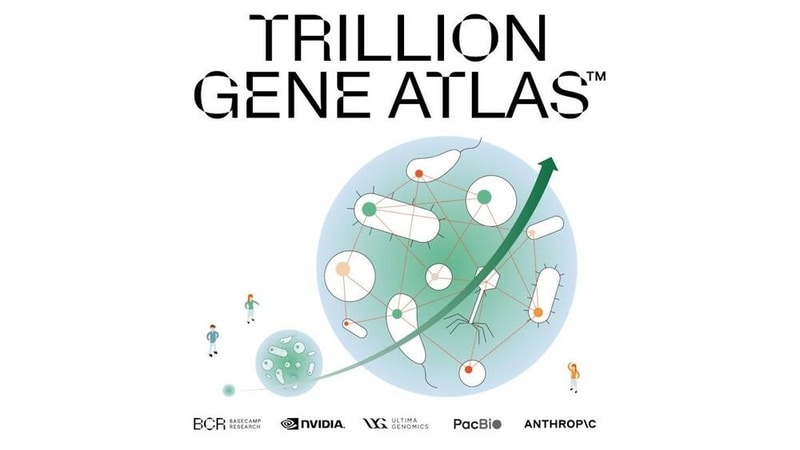
Basecamp Research has introduced the Trillion Gene Atlas, a scientific initiative designed to dramatically expand the genetic data available for training artificial intelligence models in therapeutic development. This project represents a concerted effort to address a major bottleneck in the field — the reliance on a narrow and relatively shallow pool of public genetic information.
By forging a global network of biodiversity partners across dozens of countries, Basecamp Research aims to collect genomic data from over 100 million species and effectively increase the known evolutionary genetic diversity by a factor of 100.
The Trillion Gene Atlas project is made operationally feasible through strategic technology partnerships. Basecamp Research is utilizing Ultima Genomics’ high-throughput sequencing systems and PacBio’s accurate long-read technology, while the computational burden of processing quadrillions of DNA base pairs is managed through NVIDIA’s accelerated computing infrastructure.
Image Credit: Basecamp Research
Key Themes Behind This Trend
- Massive Biodiversity Genomic Databases
- The aggregation of genomic data from millions of species is creating training sets that could reveal previously unseen biological mechanisms and novel therapeutic targets.
- AI-optimized Genomic Sequencing
- Machine-learning–guided sequencing workflows are enabling higher-throughput, lower-cost generation of complex long-read and short-read datasets that expand the scope of analyzable genomes.
- Cloud-accelerated Genomic Processing
- Exascale and GPU-accelerated compute environments are making it feasible to process quadrillions of base pairs, enabling models that scale across evolutionary time and genomic complexity.
Where This Applies
- Pharmaceutical R and D
- Drug discovery organizations stand to access richer target space and evolutionary insights that could shift small-molecule and biologic candidate selection toward previously untapped mechanisms.
- Sequencing and Biotechnology Tools
- Manufacturers of high-throughput sequencers and long-read platforms are positioned to supply the instrumentation backbone for population-scale and biodiversity-focused genomics efforts.
- Cloud Infrastructure and High Performance Computing
- Providers of GPU clusters and distributed storage could enable new service models around petabyte-to-exabyte scale genomic analytics and pretrained biological AI models.