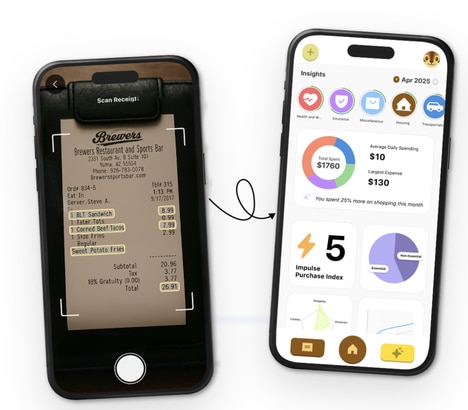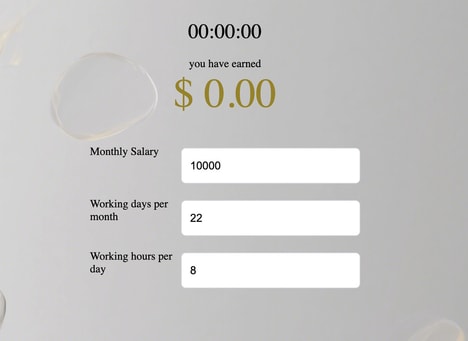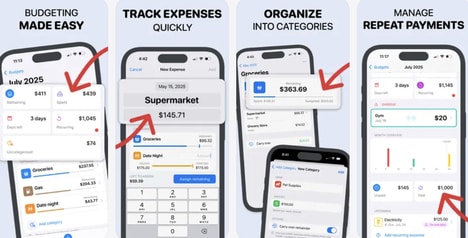
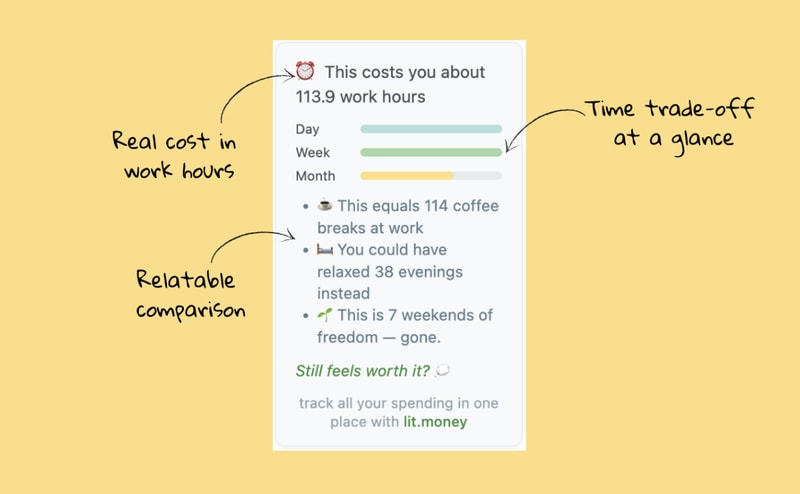
TimeSpender helps users view spending from a different perspective by converting the price of purchases into the amount of working time required to earn that money.
Instead of seeing only a dollar amount, the app reveals how many hours, days, or even weeks of work each purchase represents. This simple shift in perspective encourages more thoughtful spending and helps users better understand the long-term impact of everyday financial decisions.
Whether you're considering a major purchase or questioning an impulse buy, TimeSpender offers a clearer picture of the trade-off between your income and your time. It transforms abstract prices into something far more personal and meaningful. By reframing spending in terms of life rather than money, TimeSpender encourages mindful financial choices and helps users place greater value on the time they work to earn.
Image Credit: TimeSpender
What Makes This Trend Stand Out
- Time-based Spending
- Converting purchase prices into hours worked reframes consumption around personal effort, creating space for financial tools that make costs feel more tangible and emotionally relevant.
- Mindful Finance Apps
- Digital budgeting experiences are moving beyond tracking balances to encourage reflection, signaling opportunities for behavior-focused platforms that reduce impulse spending through contextual insights.
- Personal Value Calculators
- Consumers increasingly seek personalized metrics that translate abstract decisions into life impact, opening room for calculators that connect money, time, goals, and well-being.
Sectors Adopting This
- Personal Finance
- Fintech products that interpret spending through lifestyle trade-offs can differentiate traditional budgeting by linking everyday purchases to earned time and long-term priorities.
- Consumer Software
- App-based decision tools with simple emotional framing can expand utility beyond productivity, supporting new software experiences that make daily choices more self-aware.
- Financial Wellness
- Employer and consumer wellness programs can incorporate time-cost perspectives to make financial education more relatable, strengthening engagement with savings, debt, and purchase decisions.