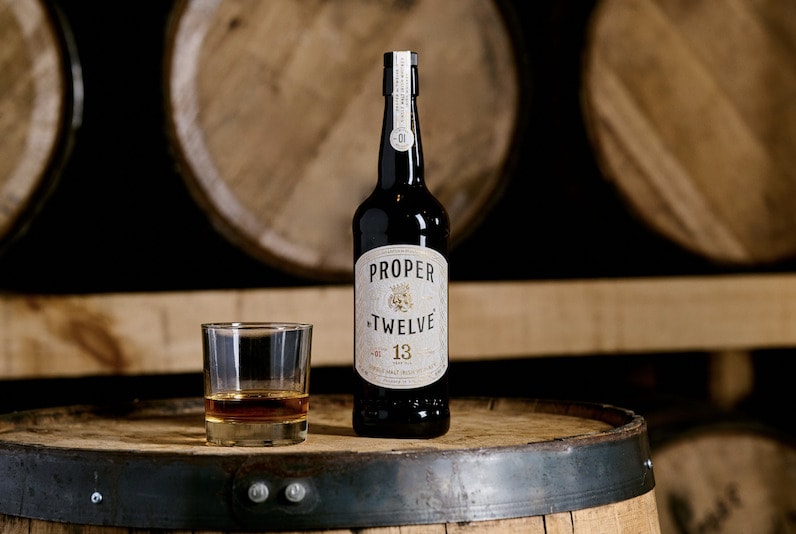
Proper No. Twelve's inaugural aged release — the Thirteen Year-Old Single Malt — marks a strategic expansion for the brand beyond its core blended Irish whiskey lineup. This limited-edition expression demonstrates a notable shift toward premiumization, offering whiskey enthusiasts a more mature and complex alternative to the brand's accessible flagship bottling.
The Thirteen Year-Old Single Malt presents an intriguing cask strategy that combines first-fill Bourbon barrels for classic vanilla and oak influences with second-fill Ruby Port casks that impart subtle dried fruit and spice nuances. The resulting whiskey is bottled at a robust 96 proof (48% ABV) to preserve its full character.
Proper No. Twelve's release occupies a compelling middle ground between entry-level and ultra-premium single malts.
Image Credit: Proper No. Twelve
What's Driving This Trend
- Premiumization of Whiskey
- The release of a limited-edition aged single malt signifies a shift towards offering more luxurious and refined whiskey options to consumers.
- Innovative Cask Strategies
- Combining first-fill Bourbon barrels with second-fill Ruby Port casks introduces unique flavor profiles, appealing to whiskey connoisseurs seeking novel taste experiences.
- Evolution of Mid-tier Spirits
- Positioning a product between entry-level and ultra-premium categories provides an opportunity to capture the attention of discerning yet price-sensitive customers.
Who This Affects Most
- Craft Distilling
- Distinctive aging techniques and creative blending processes can drive growth as distillers target consumers looking for artisanal and exclusive offerings.
- Alcoholic Beverage Retail
- Retailers can benefit from the emerging trend by expanding their offerings to include limited-edition and exclusive small-batch spirits.
- Cask Production
- The demand for specialized casks that enhance flavor profiles presents opportunities for cooperages to innovate in barrel design and wood sourcing.