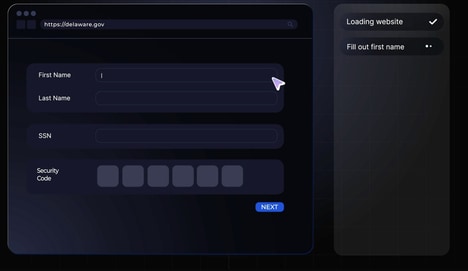
Iris is an AI system designed to automate complex computer-based tasks with human-like precision. It functions as a digital agent capable of navigating software interfaces, performing multi-step operations, and adapting to diverse workflows. Unlike traditional automation tools limited to predefined scripts, Iris uses advanced AI models to interpret context and make decisions dynamically.
For businesses, this represents a significant advancement in process efficiency, enabling teams to offload repetitive or intricate digital work to intelligent systems. The platform reflects a broader industry movement toward adaptive automation—where AI agents perform knowledge work once exclusive to humans. By combining contextual awareness with precision execution, Iris aims to bridge the gap between task automation and intelligent assistance, providing scalable, high-fidelity digital labor for modern enterprises.
Image Credit: Iris
What Makes This Trend Stand Out
- Adaptive AI Automation
- Emerging platforms like Iris exemplify the shift towards AI systems that adapt dynamically to complex and varied workflows, offering a significant leap from traditional automation methods.
- Contextual Computing
- AI models that integrate contextual understanding into task execution are setting new standards in digital task management, transforming how tasks that require nuanced decision-making are approached.
- Intelligent Digital Labor
- The development of hyper-efficient AI agents capable of performing multi-step operations opens up vast potential for reimagining digital productivity and workforce scalability.
Sectors Adopting This
- Software Development
- Software developers are now able to leverage AI to enhance user interface interactions, enabling more intuitive and adaptable software solutions.
- Knowledge Management
- Integrating AI with knowledge management allows organizations to redefine task execution, improving accuracy and adaptability in handling data-driven operations.
- Enterprise Automation
- Businesses are experiencing a transformation in their operational landscape through AI-driven enterprise solutions, breaking new ground in efficiency and scalability.