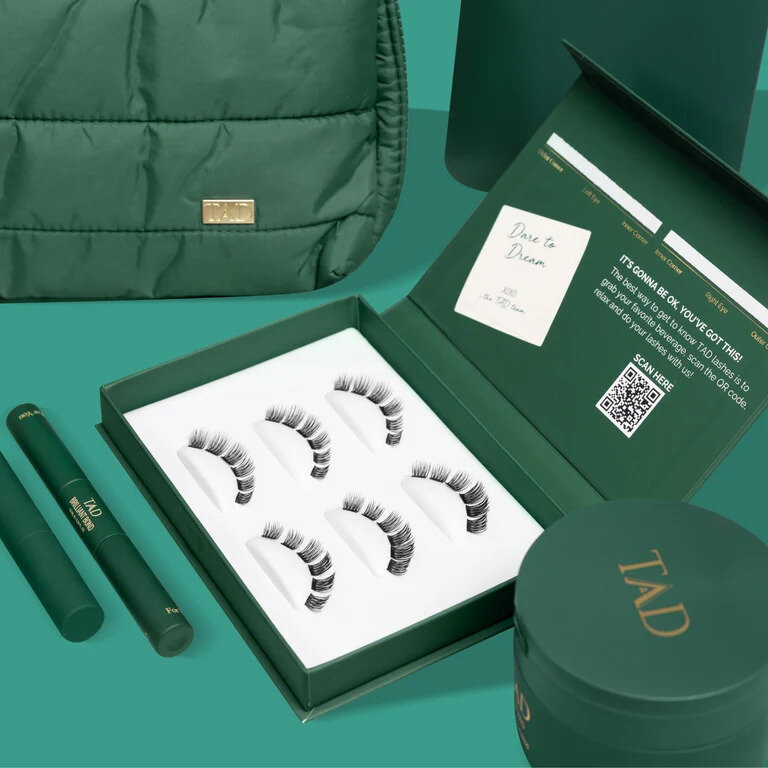
After more than a decade of wearing lash extensions, Michelle Nguyen developed an allergic reaction to the adhesive and ended her frustration with DIY lashes that poked and lifted by creating TAD Beauty, the world's first 3D-printed lash extensions. Working with experts who make medical devices using 3D technology, Nguyen developed 3D-printed lashes powered by proprietary Memory Flex technology and a microstructure that hugs the lash line and moves with natural lashes for a comfortable fit.
Designed to last up to 10 days without losing their curl, the lash extensions, 3D-printed on a curve, offer built-in flexibility and plenty of options when it comes to choosing the desired length or style, like Dream or Wispy.
What Makes This Trend Stand Out
- 3d-printed Beauty
- Additive manufacturing is reshaping cosmetic accessories with precision-fit products that offer improved comfort, customization, and performance beyond traditional molded or handmade options.
- Allergy-conscious Glamour
- Beauty consumers with sensitivities are driving demand for alternatives to harsh adhesives, heavy materials, and irritating formulations in long-wear cosmetic products.
- Flexible Wearables
- Soft, adaptive microstructures are creating new possibilities for beauty wearables that move naturally with the body while maintaining durability and aesthetic appeal.
Sectors Adopting This
- Beauty
- Personal care brands are finding room for differentiation through engineered accessories that combine style, comfort, and longer-lasting at-home application experiences.
- Additive Manufacturing
- 3D-printing specialists can expand into consumer beauty by applying medical-grade design techniques to lightweight, flexible, and highly personalized products.
- Cosmetics Retail
- Retailers have an opportunity to feature next-generation lash and eye products that address comfort, sensitivity, and customization for premium beauty shoppers.