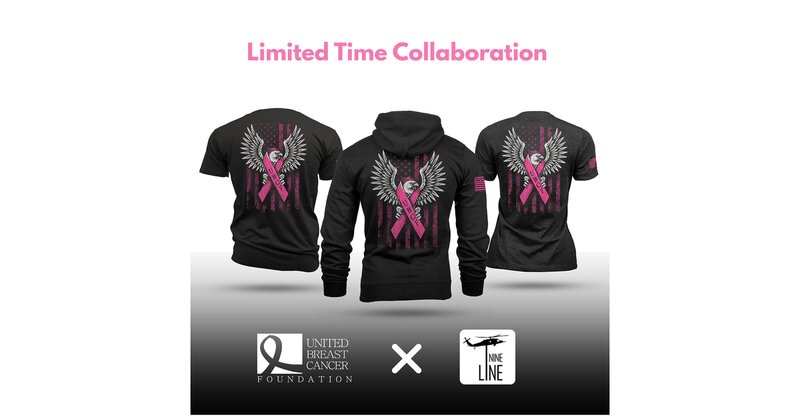
United Breast Cancer Foundation (UBCF) and Nine Line Apparel are combining fundraising with fashion through a limited-edition collection for Breast Cancer Awareness Month. Available throughout October, the collection includes t-shirts and hoodies featuring an eagle holding a pink ribbon against a pink American flag. Proceeds from each purchase benefit UBCF and its programs providing financial and emotional support to people affected by breast cancer, turning an everyday apparel purchase into a direct contribution to the organization’s mission.
The limited-time model gives UBCF a consumer-facing way to generate funding while increasing visibility during a major awareness period. For Nine Line Apparel, the partnership connects its merchandise with a charitable cause and gives customers another reason to engage with the brand. October-only availability can also create urgency around purchases, concentrating attention and fundraising activity within Breast Cancer Awareness Month.
Image Credit: United Breast Cancer Foundation
What Makes This Trend Stand Out
- Mission-linked Apparel
- Fashion items tied to charitable outcomes create new value propositions where everyday purchases double as visible support for social causes.
- Limited-time Cause Drops
- Scarcity-driven collections around awareness months can concentrate consumer attention, media relevance, and fundraising momentum within short campaign windows.
- Symbolic Consumer Activism
- Wearable symbols of support offer brands a way to transform personal style into public participation in health and social impact movements.
Sectors Adopting This
- Apparel and Accessories
- Cause-based merchandise expands apparel beyond aesthetics by embedding donation mechanics and identity signaling into product design.
- Nonprofit Fundraising
- Retail partnerships provide nonprofits with consumer-facing revenue channels that can pair emotional storytelling with direct purchase behavior.
- Health Advocacy
- Awareness campaigns connected to branded products increase visibility for patient support programs while reaching audiences outside traditional healthcare settings.