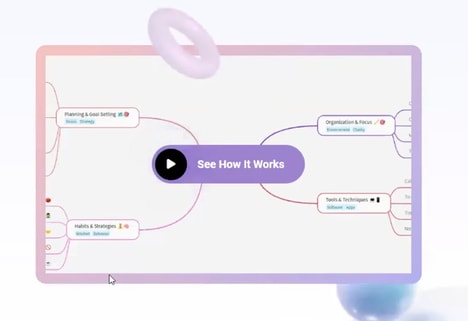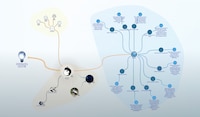
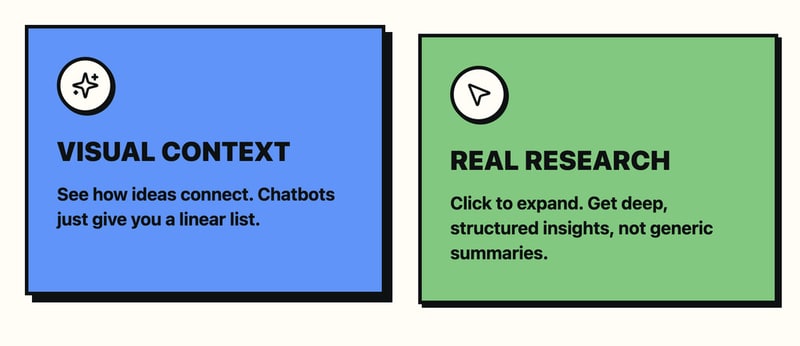
SuperMindMaps AI is a research tool designed to help users explore complex topics through visual mind maps rather than traditional chat-based interfaces. Instead of presenting information as a linear conversation, the platform organizes ideas into connected nodes, allowing users to see relationships between concepts at a glance. Each node can be expanded with deeper AI-generated research, enabling a structured approach to investigating subjects in detail.
For businesses and knowledge workers, this visual framework can support clearer strategic thinking and information synthesis. Teams conducting market analysis, product research, or learning new domains may benefit from seeing how ideas interconnect rather than navigating fragmented chat responses. By combining mind mapping with on-demand AI research, the platform reflects a broader shift toward tools that prioritize knowledge visualization and structured exploration over purely conversational information discovery.
Image Credit: SuperMindMaps AI
What Makes This Trend Stand Out
- Visual Knowledge Graphs
- A shift from linear text to graphical networks that surface relationships between concepts could enable more intuitive discovery of hidden insights across datasets.
- Interactive Research Interfaces
- Users interacting with expandable nodes instead of chat threads reveal opportunities to restructure information retrieval around exploration and context preservation.
- Structured Exploration Workflows
- Combining mind maps with on-demand AI research creates pathways for sequential, layered investigation that preserve provenance and reasoning paths.
Sectors Adopting This
- Market Research
- Analysts working with interconnected competitive and consumer data can leverage visual maps to synthesize trends and causal linkages often lost in report-driven workflows.
- Enterprise Software
- Knowledge-heavy organizations stand to benefit from embedding node-based knowledge layers into collaboration platforms to reduce information fragmentation across teams.
- Education Technology
- Learners navigating new domains may gain deeper conceptual understanding when curriculum and assessments are presented as expandable concept networks rather than linear lessons.