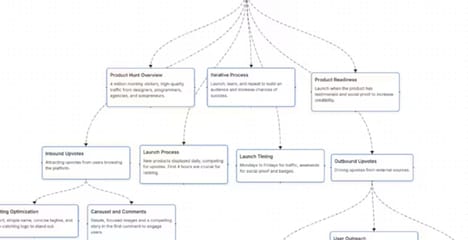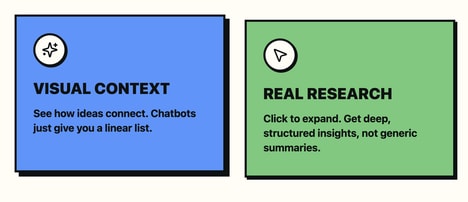
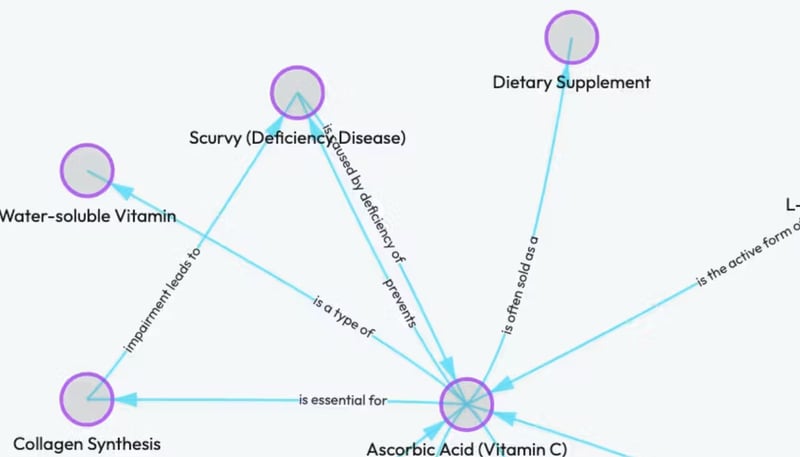
Understanding complex subjects often requires seeing how ideas relate to one another -- Concept Mesh is a free, interactive tool designed to break down any topic into a clear visual map of connected concepts.
The platform helps users explore ideas by showing their origins, relationships, and dependencies in an intuitive, structured format. This makes it easier to understand complicated subjects by visualizing how different pieces of information connect. Concept Mesh is designed to be fast and accessible, offering a clean, ad-free experience that focuses purely on learning and clarity. Users can instantly turn dense topics into simplified knowledge maps.
The tool acts as a learning co-pilot, helping users navigate information more effectively and gain deeper insight through structured visualization. Concept Mesh transforms complex knowledge into clear, interconnected maps that make learning more intuitive and engaging.
Image Credit: Concept Mesh
Key Themes Behind This Trend
- Visual Knowledge Mapping
- Interactive maps convert dense subjects into connected concept networks, creating room for faster comprehension tools across education, research, and enterprise learning.
- AI Learning Co-pilots
- Personalized guidance systems are reshaping self-directed learning by making complex information easier to navigate through structured context and dependency mapping.
- Ad-free Learning Interfaces
- Minimalist, distraction-free platforms signal demand for focused digital education experiences built around clarity, accessibility, and user trust.
Where This Applies
- Education Technology
- Visual learning platforms are expanding the market for tools that simplify abstract topics and support more intuitive student engagement.
- Knowledge Management
- Enterprise teams benefit from connected information maps that reveal relationships between documents, processes, and institutional expertise.
- Professional Training
- Workforce development programs can be transformed by concept visualization systems that make technical onboarding and continuous learning more efficient.