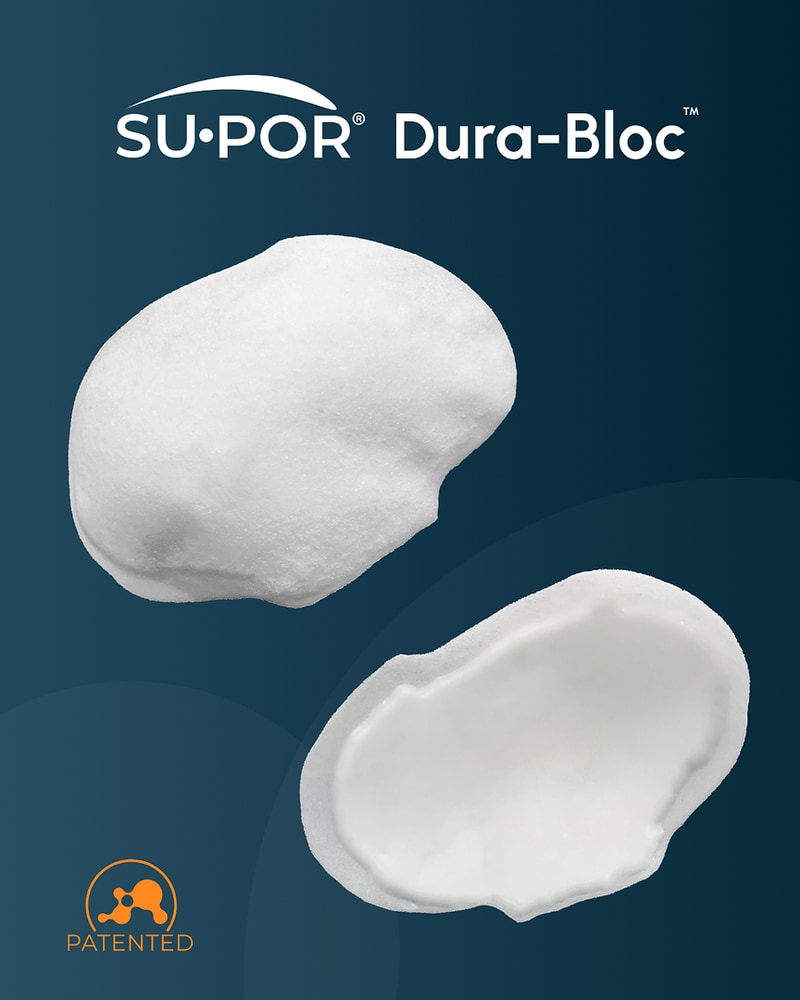
Poriferous — a leading global manufacturer of Su‑Por craniomaxillofacial and patient-specific implants — has been awarded a U.S. patent for its specialized implant design. Dubbed DuraBloc technology, this innovation features a smooth, nonporous underside while retaining the porous polyethylene structure on the top surface.
Poriferous' specialized implant design creates a dual-sided device that promotes fibrovascular ingrowth for natural tissue integration and simultaneously reduces unwanted tissue adhesion to facilitate easier surgical removal if necessary. This technology builds upon the company's established biocompatible porous polyethylene material, which is known for its interconnecting, omnidirectional pore structure that allows for tissue ingrowth and long-term stability. It can be carved, trimmed, and feathered in the sterile field, as well as drilled and securely fixated without risk of cracking. The Advanced Retained Shape Memory property ensures that the implant maintains its form after contouring.
Image Credit: Poriferous
What Makes This Trend Stand Out
- Dual-surface Implants
- Hybrid implant architectures that combine porous integration zones with smooth anti-adhesion surfaces create new value in devices designed for both stability and future removability.
- Patient-specific Biomaterials
- Customized biocompatible materials with shape retention and intraoperative adjustability are reshaping expectations for precision reconstruction and surgical flexibility.
- Removable Tissue Integration
- Implants engineered for controlled tissue ingrowth without unwanted adhesion introduce a new balance between long-term fixation and revision-friendly surgical outcomes.
Sectors Adopting This
- Craniomaxillofacial Surgery
- Advanced implant surfaces present opportunities for reconstructive procedures that require durable anatomical fit, tissue compatibility, and simplified removal pathways.
- Medical Device Manufacturing
- Patented material designs with differentiated surface functions strengthen competitive positioning in high-performance implant platforms.
- Biomaterials Engineering
- Porous polyethylene innovations demonstrate how surface-specific material behavior can expand the functional range of implantable medical technologies.