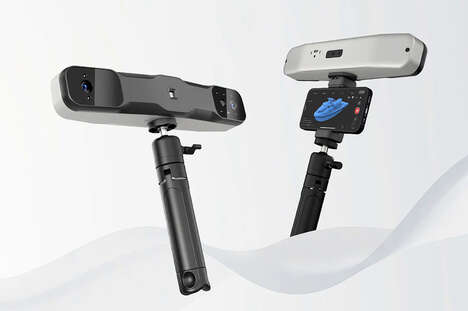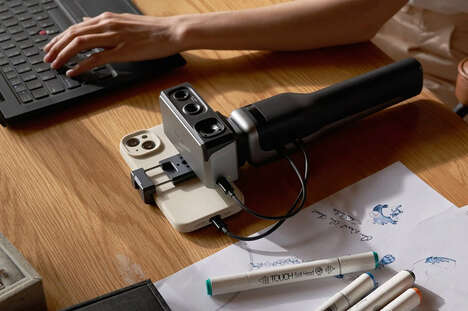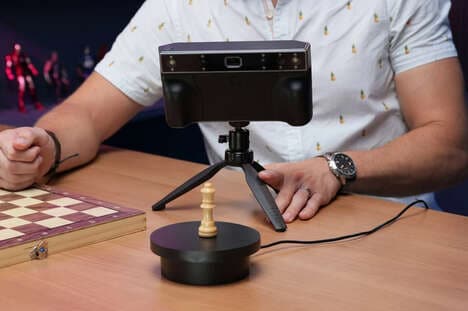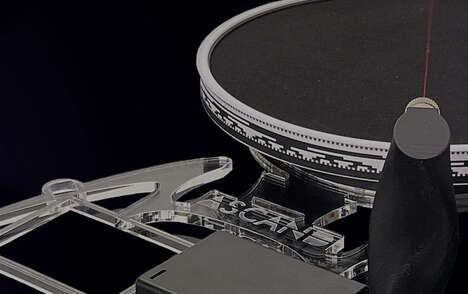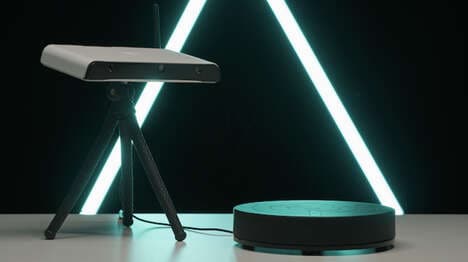
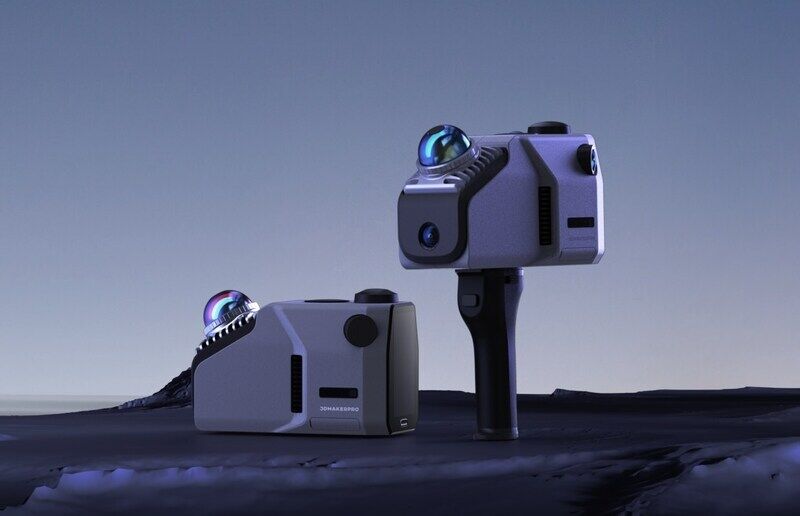
3DMakerpro has introduced its Eagle Series Spatial 3D Scanners, a new line of devices that leverage advanced LiDAR and imaging sensor technology to capture detailed spatial data. These scanners are designed for a wide range of applications, including reverse engineering, digital twinning, asset management, extended reality, precision mapping, and 3D printing. With a scanning range of up to 140 meters and an accuracy of within two centimeters at 10 meters, the Eagle Series Spatial 3D Scanners are well-suited for projects requiring high precision. The devices also boast a lightweight design at just 1.5 kilograms and a built-in battery that supports an hour of continuous operation.
The series includes two models — the Standard and the Max. The latter option stands out with its four 48-megapixel cameras that enable 8K panoramic photos and enhanced color accuracy, even in difficult lighting conditions. Both models integrate seamlessly with RayStudio software.
Image Credit: 3DMakerpro
Key Themes Behind This Trend
- Lidar-enhanced Imaging
- Leveraging LiDAR coupled with high-resolution imaging offers unprecedented accuracy for capturing intricate spatial details.
- Extended Reality Integration
- Spatial 3D scanning technology is unlocking new possibilities for immersive extended reality experiences.
- Comprehensive Digital Twinning
- Advanced scanning capabilities are revolutionizing the creation of detailed digital twins for improved asset management and simulation.
Where This Applies
- Construction and Infrastructure
- High-precision 3D scanning technology is transforming the way projects are designed, monitored, and maintained in the construction sector.
- Healthcare and Medical Devices
- The healthcare industry could greatly benefit from using spatial scanners for patient-specific 3D modeling and prosthetics development.
- Automotive and Aerospace Engineering
- Precision mapping and reverse engineering capabilities are crucial for advancements in automotive and aerospace innovations.