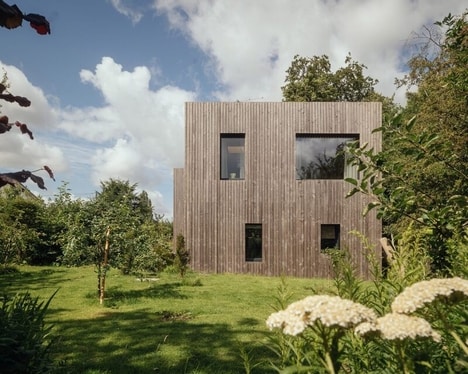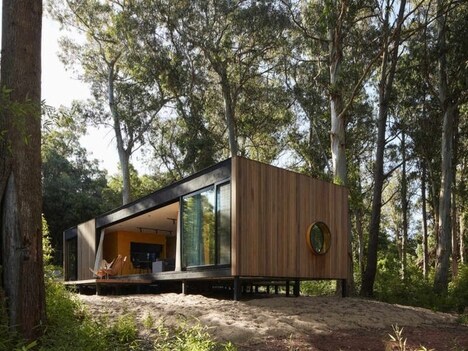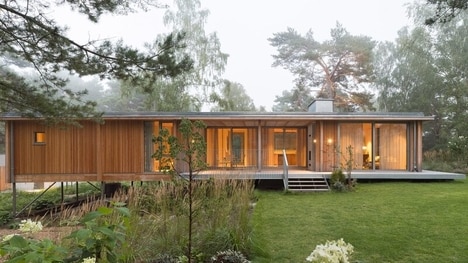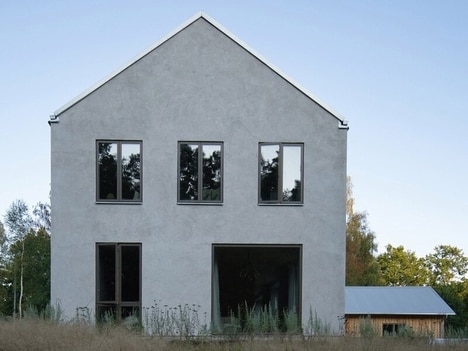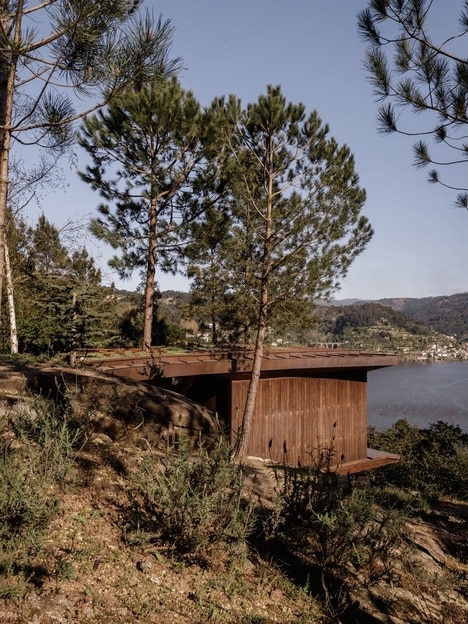
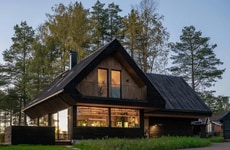
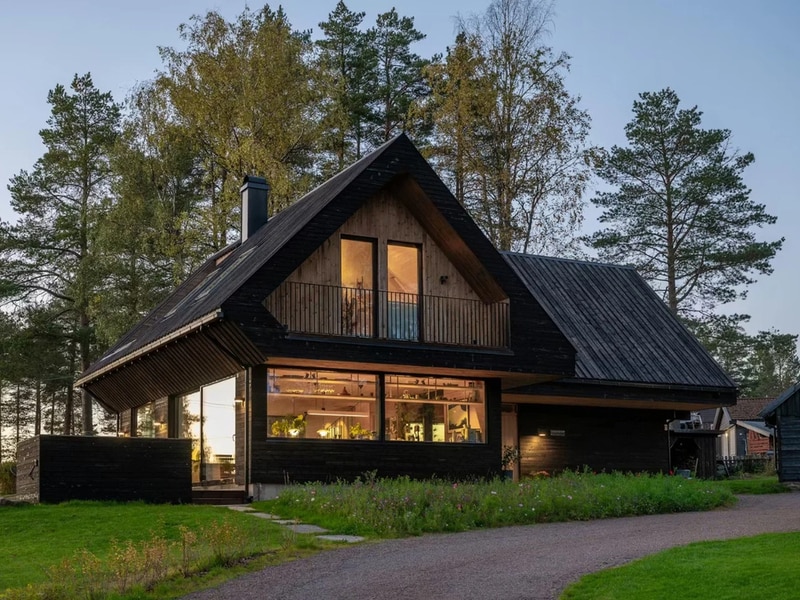
MORFEUS arkitekter introduced the Solem Forest House, a 170 m² residence near Maridalsvannet in Oslo designed to recede into tall pines, featuring dark vertical timber cladding that visually aligns with surrounding trunks. The design was presented as a new build that retained the existing 1946 foundation walls, with rainwater-permeable external surfaces to honor the site’s ecology.
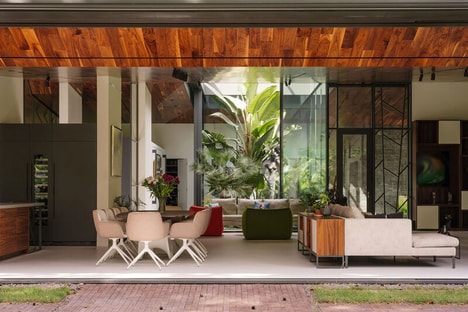
A steep cross-gabled roof partly encloses the second floor, creating angled rooms and sheltered nooks; interiors used solid wood finishes, a fireplace, large picture windows, custom shelving and a glass floor detail that channels light between levels. The team preserved topsoil, exposed rock and existing vegetation to minimize disturbance in the city’s regulated water catchment.
For homeowners and designers, the project demonstrates site-led restraint: it prioritizes context, material tactility and low-impact siting to make a modest footprint feel integrated and timeless. The house models a quieter sustainability that complements contemporary forest retreats.
Image Credit: Morfeus Arkitekter
Key Themes Behind This Trend
- Contextual Timber Architecture
- A design language that uses dark vertical timber and massing to visually merge buildings with forest trunks, suggesting new opportunities in camouflage-informed façade systems.
- Permeable Ecological Surfaces
- Exterior finishes that allow rainwater permeability and preserve topsoil point to materials and assemblies that balance durability with watershed-friendly hydrology.
- Foundation-first Adaptive Reuse
- Retaining and building upon existing 1940s foundation walls highlights strategies where new-build programs leverage legacy structures to reduce embodied carbon and site disturbance.
Where This Applies
- Residential Architecture
- Forest‑adjacent homes focused on low-impact siting and angled roof volumes indicate openings for firms specializing in site-led, context-sensitive residential design.
- Sustainable Building Materials
- Solid wood interiors, permeable claddings and tactile finishes imply demand for certified timber products and engineered systems that deliver longevity with low environmental cost.
- Urban Water Management
- Projects within regulated water catchments that prioritize permeability and vegetation preservation reveal potential for integrated stormwater solutions tuned to protect municipal reservoirs.