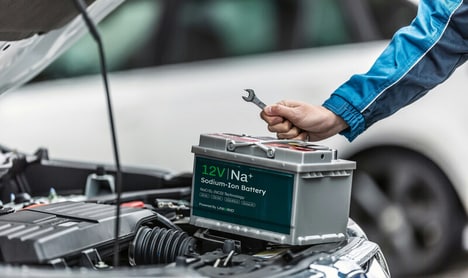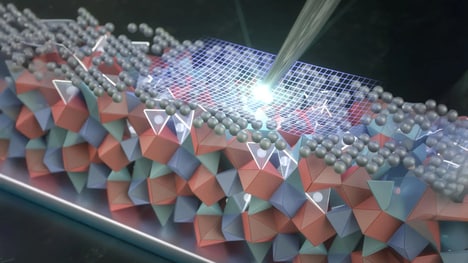
A group of scientists and researchers from the University of Maryland and the National Center for Nanoscience and Technology from Beijing have created a high-tech sodium-ion battery using a decidedly low-tech ingredient -- an oak leaf. The researchers baked the oak leaf before flushing it with sodium, creating a negative battery terminal.
The leaf's natural shape makes it ideal for battery use, thanks to its low surface area and the fact that it includes a lot of tightly packed miniature structures. The scientists baked a dry leaf at 1,000 degrees Centigrade for an hour, before immersing it in hydrogen chloride for six hours to get rid of inorganic impurities. The end result is a carbonized leaf whose pores can absorb sodium electrolyte.
This sodium-ion battery is a wonderful invention as it proves that organic materials do indeed have potential to take care of some energy needs.
Why This Trend Is Growing
- Organic Batteries
- The use of organic materials in battery technology presents opportunities for sustainable and eco-friendly energy solutions.
- Sodium-ion Batteries
- The development of efficient and cost-effective sodium-ion batteries could revolutionize the energy storage industry.
- Carbonized Leaf Batteries
- The utilization of natural materials for battery electrodes could lead to advancements in battery technology and more versatile energy storage solutions.
Industries Being Reshaped
- Renewable Energy
- The renewable energy industry could benefit from the development of sustainable and eco-friendly batteries using organic materials.
- Energy Storage
- The energy storage industry could be disrupted by the introduction of more efficient and cost-effective sodium-ion batteries.
- Battery Technology
- The battery technology industry could see advancements in the utilization of natural materials for electrodes and the creation of more versatile energy storage solutions.