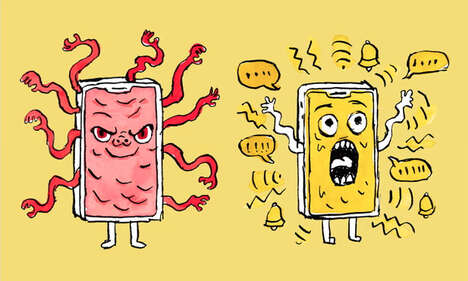
Social media is notorious for destroying relationships, outing cheating partners and exposing gossip, but these are mostly caused by a severe social media addiction.
The Social Sickness Infographic categorizes the different types of addicts and makes you ask yourself which kind you really are: the Alert-Lover, Verb Creator, Vowel Dropper, Liker, Freak-Outer and so many more. Social media has evolved in such a way that it has caused a distinct lack of human interaction in today’s society. An important question the infographic focuses on is whether people have an “unhealthy relationship” with social media.
Most people on the morning commute aren’t reading or chatting or even catching up on sleep; they’re checking their smartphones, updating their status, or uploading random photos on Instagram. Social media was initially created to help people connect with friends and others around the world, but it has evolved at viral speed into a platform where individuals overshare, making it extremely convenient to stalk each other.
What Makes This Trend Stand Out
- Social Media Addiction
- The infographic highlights various types of social media addiction, highlighting the need for technology to promote a healthy relationship with social media.
- Decrease in Human Interaction
- The infographic highlights how social media has caused a decrease in human interaction, creating opportunities for technology to promote more in-person social interactions.
- Oversharing on Social Media
- The infographic highlights the trend of oversharing on social media, creating opportunities for technology to promote more privacy and security on social media platforms.
Sectors Adopting This
- Technology
- The technology industry can address social media addiction and decrease in human interaction by creating products that promote healthy, balanced use of technology.
- Marketing
- The marketing industry can address oversharing by creating campaigns that promote more thoughtful, intentional use of social media platforms.
- Psychology
- The psychology industry can address social media addiction and decrease in human interaction by conducting research and creating programs that facilitate the development of healthy relationships with technology and promote more face-to-face interaction.