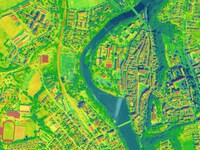

Bristol University created the Smart Internet Lab, to use 5G radio models and mapping technology to create a 3D twin of the city.
The project will be used to predict for 5G radio signals will flow through the city to autonomous and connected vehicles. By using airborne laser scanners, the team captured a 3D model of the buildings, trees and terrain -- while mapping mobile divided on the group within the model to explore communication in the network. All of the information is integrated into the Digital Twin, to create an accurate signal level to successfully deploy 5G networks.
The Smart Internet Lab at Bristol University uses digital twin technology to become the world-leader in the development of 5G mapping tools and radio models.
Why This Trend Is Growing
- 5G Mapping Tools
- Developing sophisticated tools and models for mapping 5G networks and signal prediction using digital twin technology.
- Autonomous and Connected Vehicles
- Leveraging 5G radio models and mapping technology to create predictive models for how 5G signals will flow through cities and impact the performance of autonomous and connected vehicles.
- Digital Twin Technology
- Advancing the use of digital twin technology to create accurate signal prediction and facilitate the successful deployment of 5G networks.
Industries Being Reshaped
- Telecommunications
- Exploring opportunities to improve signal prediction and deployment of 5G networks in the telecommunications industry using digital twin technology.
- Transportation
- Integrating 5G radio models and mapping technology to better understand the impacts of 5G signals on autonomous and connected vehicles in the transportation industry.
- Technology Innovation
- Driving disruptive innovation in the development of sophisticated 5G mapping tools and radio models using digital twin technology.