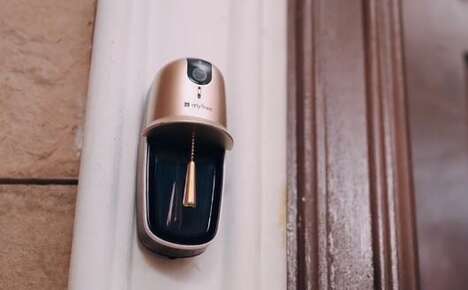
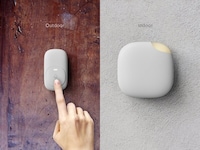
Alex Mckeown designs the Skitter doorbell concept which is a unique angle of home technology ideas. It welcomes guests with a subtle kinetic buzz sound instead of the usual chimes or flashing alerts. The ambient experience is much more soothing and has a rhythmic cicada hum feeling.
The sensor response isn't meant to be jarring but instead a natural experience. It is installed on a bright teal door for display and looks like a tooth at first. It is made from sandblasted aluminum and boasts a curved shape with etched accents that look like insect wings. The 'antennae' is a flexible wire that stretches out from each side to catch the wind. Notably, it is powered by a solar panel.
Image Credit: Alex Mckeown
What's Driving This Trend
- Sensory-driven Doorbells
- The shift toward sensory-driven doorbells, which use subtle sounds and movements like rhythmic hums, enhances user experience by creating a more calming and natural entryway alert system.
- Biomimicry in Design
- Adopting biomimicry in design, as seen with the tooth-shaped doorbell and its insect-inspired features, presents new avenues for blending form and function in home technology.
- Solar-powered Smart Home Devices
- The integration of solar-powered elements into smart home devices demonstrates potential for eco-friendly advancements that reduce reliance on traditional power sources.
Who This Affects Most
- Home Automation
- Home automation continues to evolve by incorporating ambient and aesthetically-driven technologies that improve user interaction through more harmonious designs.
- Renewable Energy Tech
- The renewable energy tech industry can leverage solar power innovations to enhance the environmental sustainability of small everyday devices.
- Industrial Design
- The field of industrial design finds transformation potential by blending artistic biomimicry with practical applications to create uniquely functional products.