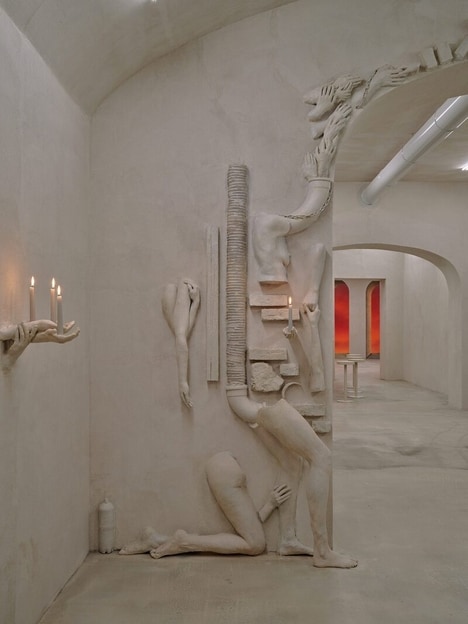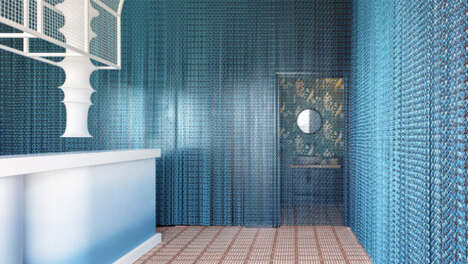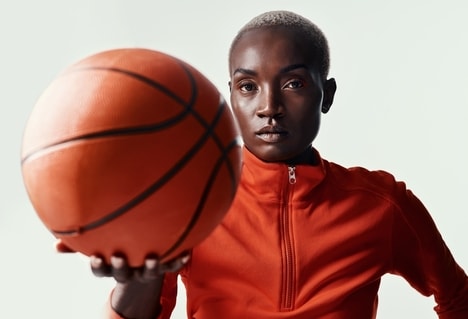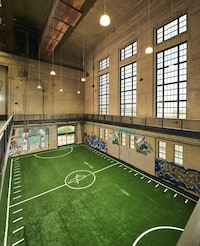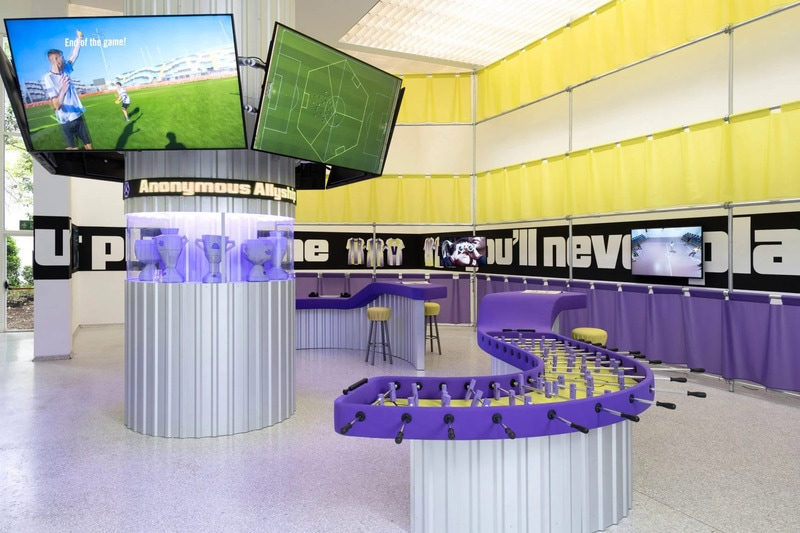
Amanda Pinatih curated and Gabriel Fontana designed Sidelined, an immersive and dynamic sports bar at the Venice Architecture Biennale. The Dutch Pavilion has been transformed into a fictional sports bar which explores themes rooted in identity and inclusivity at the forefront. The space is filled with screens, scarves, and trophies -- all of which bring attention to the inclusive games playing out.
Pinatih speaks about the design to Dezeen, "As a site of both social production and identity formation, sports bars unite diverse communities around shared experiences, nurturing a sense of belonging." Fontana adds, "The pavilion is designed to invite visitors to engage actively, reflect critically, and envision new possibilities for more connected and compassionate communities."
Image Credit: Cristiano Corte
What's Driving This Trend
- Inclusive Sports Venues
- Spaces designed with inclusivity at the forefront foster connection and community, offering a fresh perspective on traditional sports venues.
- Immersive Fan Experiences
- Interactive and engaging sports bar experiences redefine how patrons participate in and enjoy sporting events, blending physical and digital interactions.
- Intersection of Design and Identity
- Employing design innovations that reflect identity transformation, venues are creating environments where self-expression and belonging are paramount.
Who This Affects Most
- Architecture and Interior Design
- The convergence of architectural design and identity exploration presents opportunities for spaces that challenge traditional norms and inspire inclusivity.
- Hospitality and Entertainment
- Transformative sports bars are reshaping the hospitality landscape by integrating cultural storytelling and collective engagement into the on-site experience.
- Sports and Recreation
- By incorporating elements that emphasize social and cultural connections, the sports industry innovates beyond traditional athletic competitions to foster community.