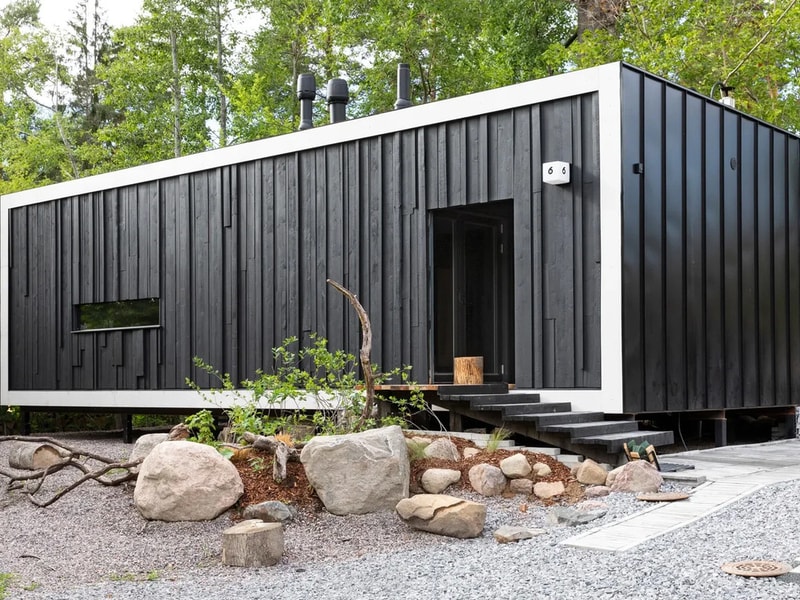
The Shadow house by Matti Kuittinen is a 365-square-foot family home built in Lohja, Finland using a majority of recycled materials. The Finnish architect constructed the house as a live-in prototype, using elements such as old fishing nets for flooring, recycled car tires for the roof, scrap steel for the structure, and insulation made from reused glass. Around 56 percent of the building is composed of reused or recycled components, with the remaining materials sourced for low environmental impact.
The layout is organized as a compact open space that shifts between living, sleeping, and working functions. Curtains divide the interior instead of fixed walls, while sleeping pods are stacked vertically to conserve floor area. The house also includes a kitchen, bathroom, and a small wood-fired sauna within the footprint. Construction took approximately four months, with the full project completed in one year as a permanent residence for the architect and his family.
Image Credit: Matt Kuittinen
Why This Trend Is Growing
- Recycled-material Architecture
- Compact live-in prototypes composed predominantly of reused components illustrate new supply-chain models and embodied-carbon reductions for mainstream housing.
- Curtain-divided Interiors
- Flexible soft-partitioning replaces permanent walls to enable denser layouts and multifunctional living areas within minimal footprints.
- Stacked Sleeping Pod Layouts
- Vertical nesting of sleeping units demonstrates spatial strategies that increase occupancy capacity without expanding floor area.
Industries Being Reshaped
- Residential Construction
- A move toward high-percentage recycled-material builds alters cost structures, regulatory considerations, and long-term maintenance paradigms for homebuilders.
- Prefabricated and Modular Furniture
- Compact, multifunctional furnishings designed for transformable spaces signal new product categories tailored to micro-homes and shifting lifestyle needs.
- Recycling and Waste Materials Supply
- Diversification of reclaimed inputs like tires, nets, and glass creates opportunities to standardize secondary-material specifications and quality-assurance systems.