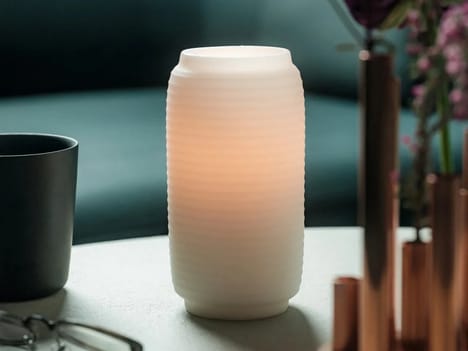
The Sero Candles system reimagines the candle around reuse and recyclability, replacing the disposable glass jar with a two-piece wood holder and a slim aluminum insert.
When a candle burns down, the aluminum can be recycled alongside household cans while the wood container is kept and refitted with a fresh scent, cutting the waste that usually comes with premium candles. Each insert is poured with 100% soy wax, a natural wood wick, and phthalate-free fragrance oils, and it skips paper labels and glue in favor of laser-etched markings and welded wick clips.
Designed and assembled in Tacoma, Washington, Sero offers three scents (Renew, Uplift, and Unwind) aimed at design-conscious consumers looking to cut single-use waste at home.
Image Credit: Sero Candles
What's Driving This Trend
- Refillable Home Fragrance
- Premium scent products are shifting toward durable outer vessels and replaceable consumable cores, creating room for brands that combine aesthetics with lower-waste replenishment models.
- Recyclable Product Inserts
- Aluminum and other widely accepted materials are becoming attractive substitutes for hard-to-recycle packaging, opening possibilities for circular formats in everyday lifestyle goods.
- Label-free Packaging
- Laser etching, welded components, and adhesive-free construction signal a move toward cleaner material streams while preserving a refined design language for sustainability-minded shoppers.
Who This Affects Most
- Home Decor
- Decorative household products are being reworked as long-term design objects with modular refill elements, allowing sustainability to become part of the product experience rather than an afterthought.
- Personal Care
- Fragrance, wellness, and ritual-based goods can benefit from reusable formats that reduce packaging waste while maintaining the sensory appeal associated with premium self-care.
- Sustainable Packaging
- Material simplification and curbside-recyclable components are reshaping packaging strategy, especially for brands seeking circular systems without relying on complex take-back programs.