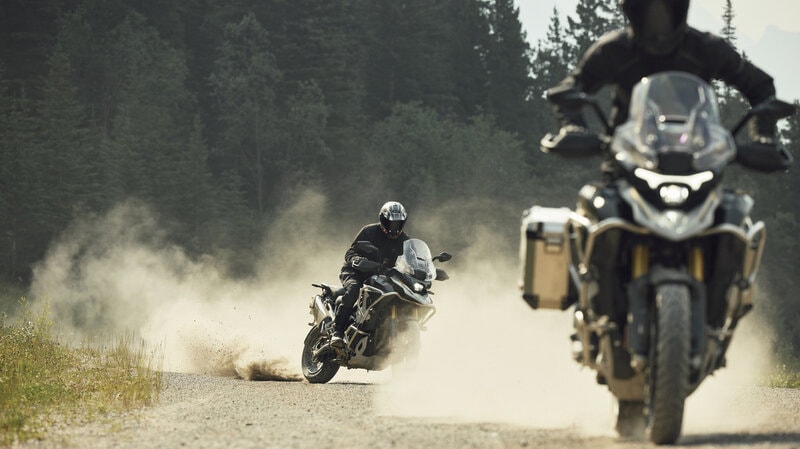
Triumph reworked the 2027 'Tiger 1200' for riders who want one motorcycle for pavement and dirt, adding Showa suspension that lowers the bike at a stop. With a low seat fitted, the stop height drops to 31.1 inches, making the big adventure model easier to manage in traffic and parking. GT and Rally versions remain, with a clearer split between road and off-road setups.
Front and rear Bosch radar provide adaptive cruise control and alert when another vehicle follows too closely. A redesigned three-cylinder engine now produces 155.8 horsepower, and the updated rider screen adds Apple CarPlay and Android Auto. Explorer versions keep the larger fuel tank for longer touring.
A 31.1-inch stop height widens the appeal of big adventure motorcycles by cutting one of the class's usual barriers. Standard radar aids and phone mirroring make the Tiger 1200 a stronger BMW GS alternative for riders who want one bike for highway miles and dirt sections.
Image Credit: Triumph
What Makes This Trend Stand Out
- Self-lowering Suspension
- Adaptive ride-height systems make large adventure motorcycles more accessible by reducing intimidation for shorter riders and improving control in low-speed urban settings.
- Radar-assisted Riding
- Motorcycle safety is shifting toward sensor-based features that bring adaptive cruise control and proximity alerts into categories once defined mainly by mechanical performance.
- Dual-use Touring Tech
- Integrated navigation, smartphone mirroring, and long-range equipment are redefining adventure bikes as connected platforms for both highway travel and off-road exploration.
Sectors Adopting This
- Motorcycles
- Premium motorcycle brands are finding growth in models that blend off-road capability, touring comfort, and rider-assistance technologies into a single versatile product.
- Automotive Safety
- Radar suppliers and safety technology firms have room to expand as two-wheeled vehicles adopt driver-assistance systems previously concentrated in cars and trucks.
- Connected Mobility
- Phone integration and digital rider interfaces create new value for software, infotainment, and mobility ecosystems within the powersports market.