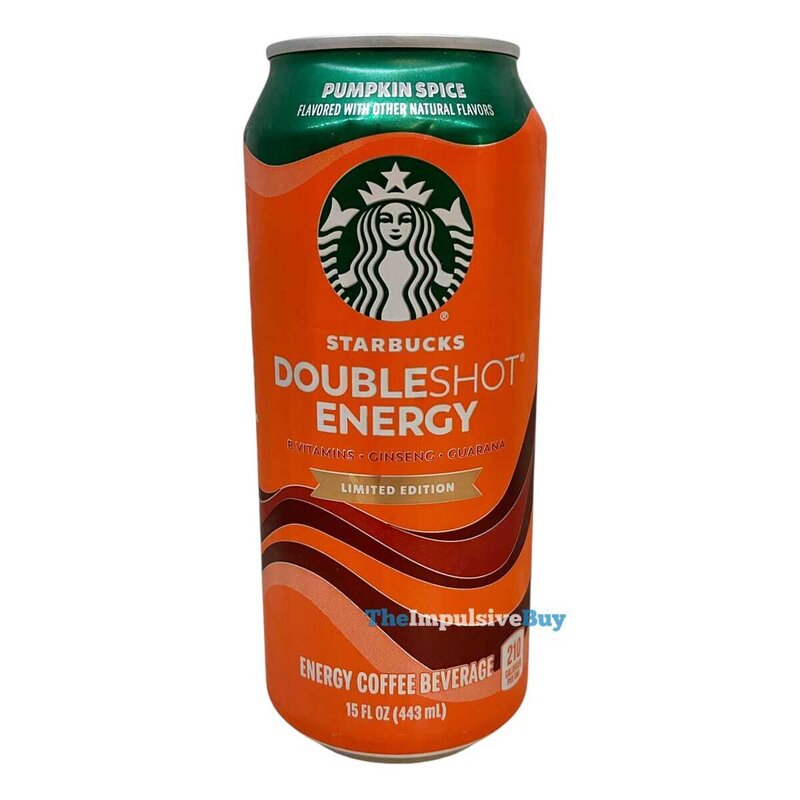
Starbucks introduced its 'Doubleshot Energy Pumpkin Spice' ready-to-drink coffee in a 15 fl oz can with pumpkin spice flavoring and 125 milligrams of caffeine. The product is positioned as a canned energy coffee that reproduces autumnal spice notes while delivering a higher caffeine dose than comparable bottled options.
The formula tastes like Starbucks' bottled Pumpkin Spice Frappuccino, with cinnamon, nutmeg, and ginger flavoring, and has 210 calories, 28 grams of sugar, and 10 grams of protein per can. It lists 3 grams of fat, 180 milligrams of sodium, and 125 milligrams of caffeine, and was available for $3.99.
For consumers, the can offers a bigger caffeine bang and fewer calories and less sugar than the bottled Frappuccino, making it a pragmatic swap for shoppers seeking stronger ready-to-drink pick-me-ups. The portable format and dose-forward profile suit people who want pumped-up, seasonal coffee in a can.
Image Credit: The Impulsive Buy
What Makes This Trend Stand Out
- Seasonal Energy Coffee
- Limited-time flavor profiles paired with elevated caffeine levels create space for ready-to-drink beverages that merge indulgent seasonal rituals with functional energy needs.
- Canned Cafe Favorites
- Coffeehouse-inspired canned formats expand familiar menu flavors into portable retail products, reshaping how consumers access branded cafe experiences beyond store visits.
- Dose-forward Indulgence
- Higher-caffeine beverages with comparatively lower sugar and calorie counts signal a growing market for treats that balance performance cues with everyday convenience.
Sectors Adopting This
- Ready-to-drink Beverages
- Portable coffee and energy hybrids are broadening the category with products that combine convenience, flavor nostalgia, and functional positioning.
- Coffee Retail
- Branded seasonal drinks moving into shelf-stable cans extend cafe equity into grocery and convenience channels while reinforcing year-round consumer engagement.
- Functional Food and Drink
- Protein, caffeine, and flavor-driven formulations illustrate how functional beverages can evolve from utilitarian products into lifestyle-oriented refreshment choices.