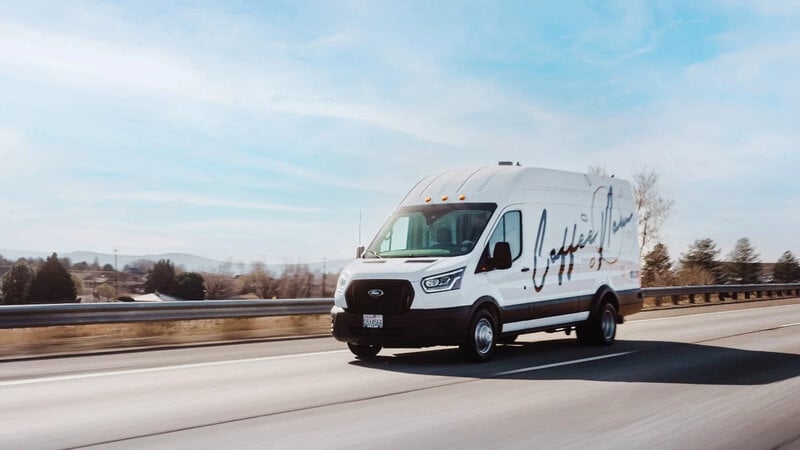
CoffeeNow organizes specialty drink orders around scheduled stops for offices and businesses, letting workers buy custom coffee without leaving work or waiting in stand lines. The company batches orders by active route instead of sending one driver to one address at a time.
Its software stack includes a customer ordering app, a van-team app and an admin dashboard. One route can cover 25 businesses, and the company has delivered 368 drinks on a single run. Customers get alerts when ordering opens and again as drinks approach, while AI and machine learning steer routes toward the strongest demand windows.
Route-only ordering turns office coffee into a B2B convenience layer, giving CoffeeNow a way to pack more orders into each stop. AI-tuned scheduling also widens the model beyond cafes by fitting hospitals and offices with predictable break-time demand.
Image Credit: CoffeeNow
What Makes This Trend Stand Out
- Route-based Commerce
- Bundled demand across predictable stops creates higher-density delivery models that can reshape last-mile economics for workplace food, beverage, and convenience services.
- AI-tuned Scheduling
- Predictive routing tied to demand windows enables mobile service providers to align inventory, staffing, and timing with recurring customer behavior.
- Workplace Micro-convenience
- Office-focused ordering layers bring consumer-grade amenities into professional environments, turning routine breaks into scalable B2B service moments.
Sectors Adopting This
- Coffee and Cafes
- Specialty drink providers can extend beyond storefront traffic by using scheduled mobile routes to serve clustered business customers at peak break times.
- Last-mile Delivery
- Batching many orders across route-based stops presents a more efficient alternative to one-address delivery for dense commercial districts.
- Corporate Foodservice
- Employers and building operators gain access to flexible refreshment services that sit between traditional catering, vending, and on-site cafes.