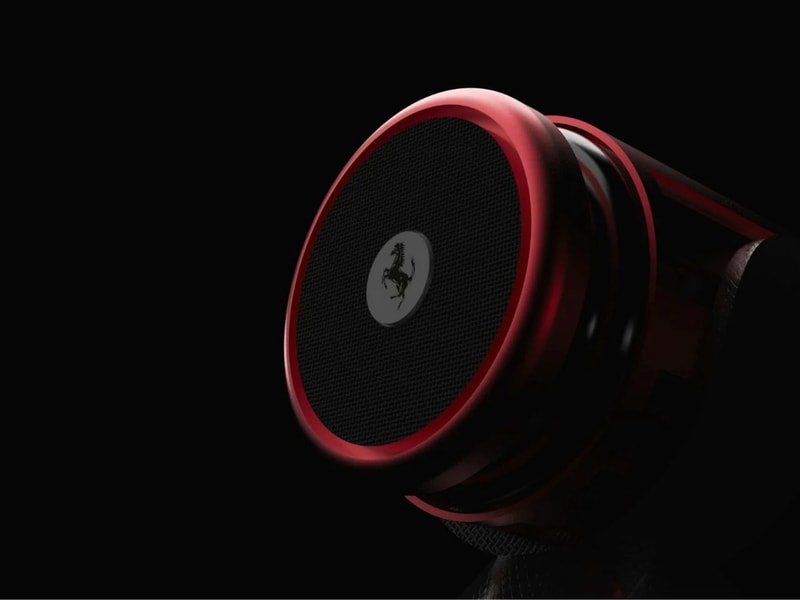
The Rosso speaker by Royal Tyagi is an audio concept inspired by the rear light signature of the Ferrari F8 Tributo, translating automotive design into a sculptural speaker form. The design centers on two circular illuminated rings that echo taillights, functioning as both identity and visual output. These rings act as a rhythmic element, suggesting motion and energy even when the speaker is static, shifting the object away from conventional audio equipment into a more expressive, presence-driven form.
The body extends this idea through stretched surfaces and forward-leaning geometry, creating a silhouette that appears in motion. Material finishes reinforce this effect, including a high-gloss metallic red, a matte black soft-touch option, and a carbon-inspired textured grille. The lighting operates as a visual extension of sound, where illumination reflects vibration and intensity.
Image Credit: Royal Tyagi
What's Driving This Trend
- Automotive-inspired Consumer Electronics
- Design cues from high-performance vehicles are being translated into premium electronic products that blur the line between lifestyle object and functional device.
- Kinetic Lighting Interfaces
- Illumination that visually reflects audio dynamics is emerging as an interface paradigm where light serves as a real-time indicator of sound behavior and intensity.
- Sculptural Audio Design
- Speakers are being reimagined as expressive sculptural pieces with form and finish used to convey motion and brand identity beyond acoustic performance.
Who This Affects Most
- Home Audio and Hi-fi
- Premium home audio can be disrupted by integrated light-sound systems that offer multisensory presence and justify elevated price positioning through sculptural design.
- Luxury Automotive Collaborations
- Co-branded lifestyle audio products present opportunities for automakers to extend visual identity and emotional resonance into consumers' living spaces.
- Smart Home Lighting and Ambience
- Adaptive lighting systems that synchronize with audio content are transforming ambient environments and enabling new experiential service tiers.