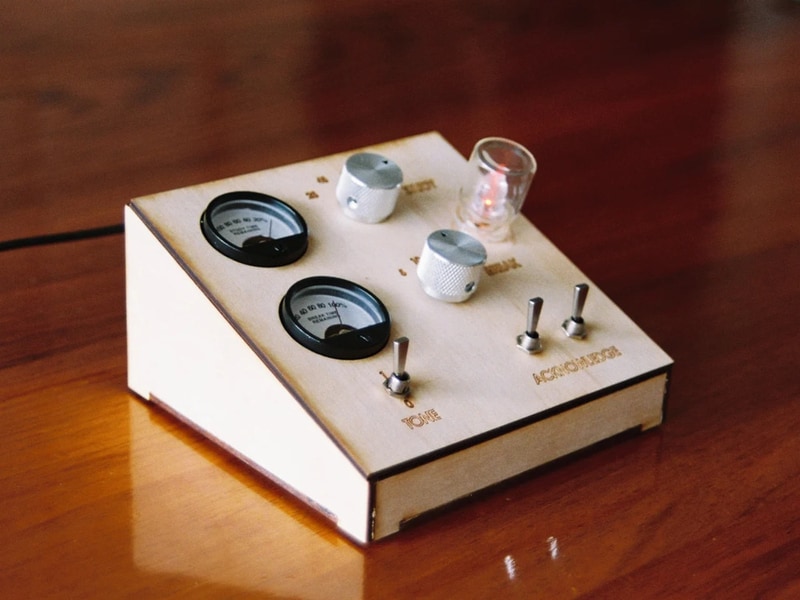
The Roma Mk.1 by Tomato Clocks is an analog study timer designed around the Pomodoro Technique, separating work and rest into two dedicated gauges. Instead of relying on apps, the device uses physical dials to set intervals instantly, removing the need to unlock a phone or navigate menus. One gauge tracks focused work sessions while the other measures break time, allowing both phases to be managed directly on the object.
The timer is constructed from laser-cut Australian timber and assembled by hand in Melbourne, pairing wood with brass switches that provide tactile feedback when starting or resetting sessions. The analog interface eliminates notifications and digital distractions, positioning the timer as a dedicated desk tool rather than a multi-function device. Its physical presence keeps it visible and accessible throughout the day, reinforcing consistent use without requiring interaction beyond setting the dials.
Image Credit: Tomato Clocks
What Makes This Trend Stand Out
- Analog Productivity Revival
- A resurgence in analog tools creates demand for single-purpose devices that reduce digital interruptions and reinforce habitual focus through visible, physical interfaces.
- Dual-dial Timekeeping
- Two-gauge timing systems offer a clear separation of work and rest periods, enabling products that codify behavioral rhythms without software complexity.
- Tactile Minimalism
- Materials-forward designs with tactile switches and simple mechanics emphasize sensory feedback and craft, appealing to users seeking embodied interactions over touchscreens.
Sectors Adopting This
- Office Accessories
- Desks and workspace ecosystems can incorporate crafted analog instruments that serve as visible focal points and reduce reliance on multifunctional digital devices.
- Educational Tools
- Learning environments may adopt physical timing aids that make study rhythms explicit for students and instructors, supporting concentration and routine formation.
- Wellness Tech
- Behavioral-wellness offerings can blend mechanical timers and material design to support mindful work-rest cycles without introducing digital stimuli.