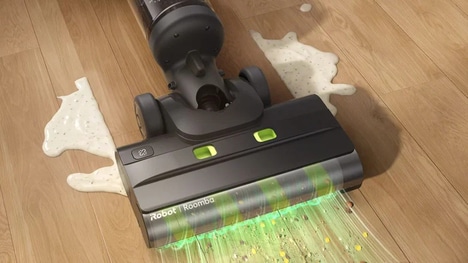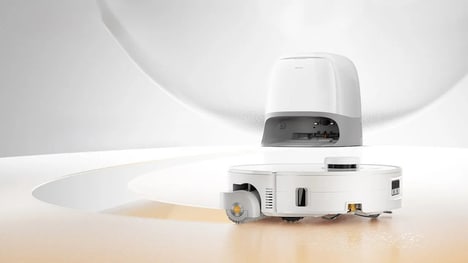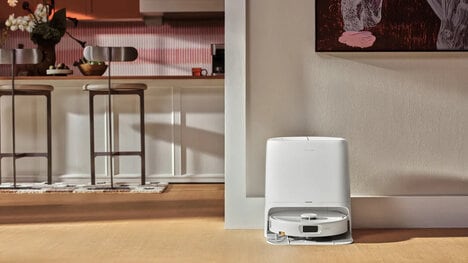
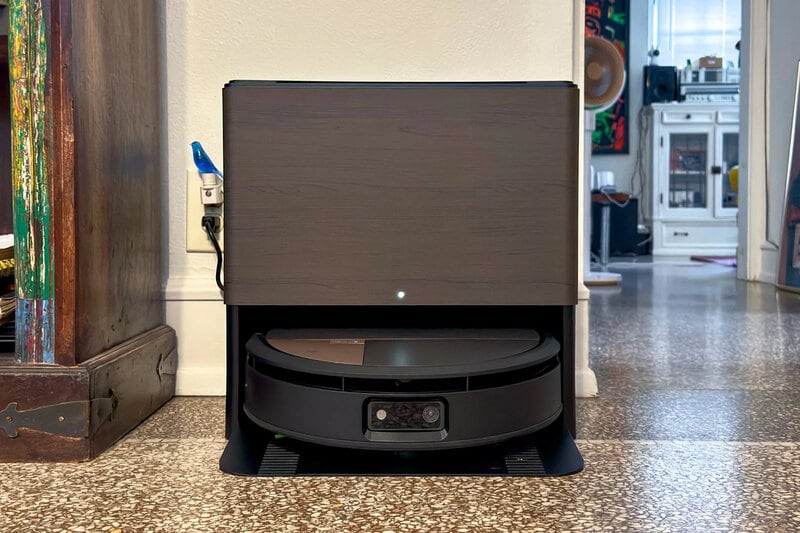
iRobot is pushing hands-off floor care with the 'Roomba Max 775 Combo Robot + AutoWash Dock,' a robot vacuum and mop that empties its dustbin and cleans its roller after each run. That setup lets people offload both everyday sweeping and some of the messier maintenance that usually follows mopping.
Its roller mop slides along baseboards, reaching edge grime that many bots miss. Back at the dock, 167-degree-Fahrenheit water washes the roller, and an extra dustbag in the base extends the time before owners need to buy a refill.
For shoppers, this means a premium robovac now has to save time after the cleaning cycle, not just during it. The Max 775 leans into convenience as part of the purchase decision, so rivals in the same price band have to match that low-maintenance care.
Image Credit: Wes Davis / Gizmodo
Key Themes Behind This Trend
- Self-maintaining Cleaning Robots
- Autonomous appliances that empty debris and sanitize mop components shift consumer expectations toward devices that manage upkeep as part of the core experience.
- Edge-focused Floor Care
- Precision cleaning features designed for baseboards and corners create differentiation in a category where missed grime remains a common pain point.
- Hot-water Hygiene Docks
- Integrated docking systems using heated wash cycles introduce premium value through perceived cleanliness, reduced odor, and lower-touch maintenance.
Where This Applies
- Home Appliances
- Connected floor-care systems are expanding the role of appliances from single-function tools into service-like platforms that reduce household labor.
- Smart Home Technology
- Robotic cleaners with automated docks strengthen the broader smart home market by making convenience and maintenance reduction key purchase drivers.
- Consumer Robotics
- Premium robot vacuums are evolving toward full-cycle autonomy, where navigation, cleaning, waste handling, and self-care define competitive advantage.