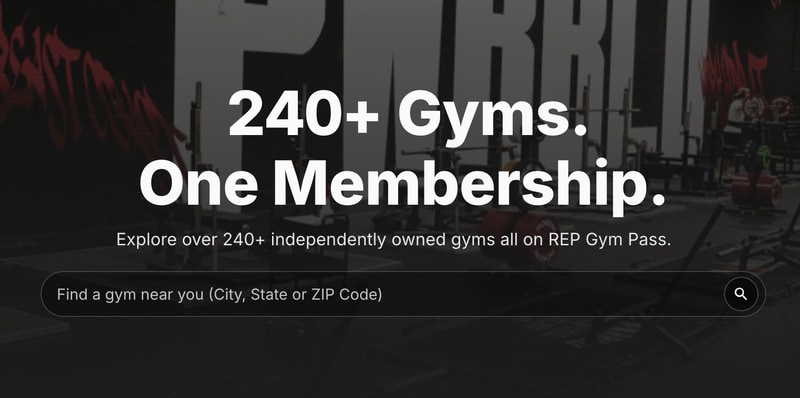
REP Gym Pass is a fitness access platform that allows users to attend a network of independently owned gyms through a single membership. Instead of committing to one location, members can choose from multiple pass options—such as The Pump, The PR, and The AMRAP — based on how frequently they plan to train.
The model is designed to support flexibility, enabling users to work out at different gyms that fit their schedule, location, or training preferences. For gym owners, the platform can help increase exposure and attract new members without traditional long-term contracts. From a business perspective, REP Gym Pass reflects a shift toward flexible, usage-based fitness models that prioritize convenience, local partnerships, and consumer choice in an increasingly mobile lifestyle.
Image Credit: REP Gym Pass
Key Themes Behind This Trend
- Flexible Fitness Memberships
- Offering short-term, multi-location gym access caters to the modern consumer's desire for adaptability and personal choice in their fitness routines.
- Usage-based Membership Models
- The trend toward pay-as-you-go memberships supports a demand for financially accessible fitness options, attracting a broader customer base.
- Local Gym Collaboration Networks
- Independent gyms are collaborating through platforms to increase their reach and offer users a diverse range of workout environments without extensive contracts.
Where This Applies
- Fitness and Wellness
- The rise of platforms offering flexible access encourages innovation in fitness services, broadening their appeal to a diverse audience.
- Tech-enabled Services
- Emerging tech platforms that aggregate independent providers are enabling new business models focused on consumer choice and flexibility.
- Shared Economy
- The incorporation of shared economy principles into the fitness sector is reshaping how consumers view traditional gym memberships and access.