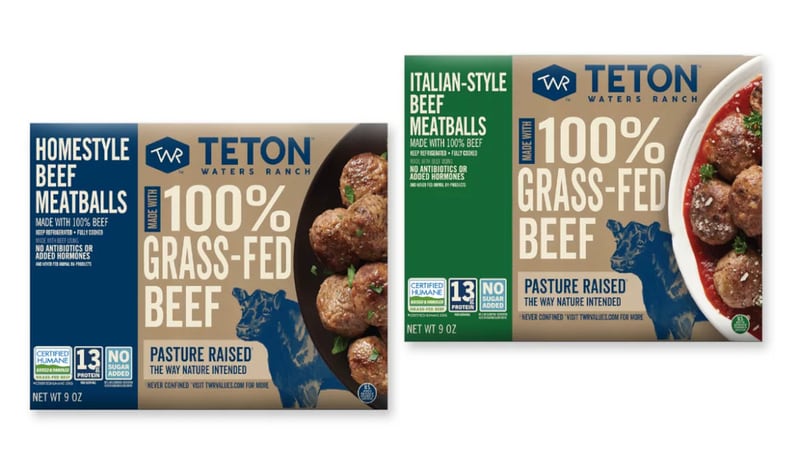
Teton Waters Ranch Refrigerated Meatballs have been developed by the brand with growing consumer demand for high-quality meat products that don't skimp on nutrition or convenience. The meatballs come in two flavors including Homestyle Beef Meatballs and Italian-Style Beef Meatballs, which are each made with pasture-raised, grass-fed beef. The meatballs are refrigerated to eliminate the need for lengthy cooking times or cooking from frozen to reduce the amount of time needed to incorporate them into a meal on a weeknight.
CEO Kevin Pallaoro spoke on the Teton Waters Ranch Refrigerated Meatballs saying, "We couldn’t be more excited for our 2026 innovation. We pride ourselves on being a leader in grass-fed beef and believe that the new meatballs will quickly become a family favorite. Additionally, bringing organic, regenerative products to the market has been a mission of mine for years, and a step in the right direction for the future of grass-fed beef."
Image Credit: Teton Waters Ranch
What Makes This Trend Stand Out
- Ready-to-eat Premium Proteins
- Creates demand for heat-and-eat protein products that marry gourmet sourcing with minimal preparation time, opening space for premium convenience SKUs.
- Regenerative-sourced Meat Products
- Signals consumer preference shifts toward pasture-raised, grass-fed, and regenerative-labeled meats that can command value premiums and differentiate offerings.
- Refrigerated Convenience Foods
- Highlights a move from frozen toward refrigerated short-prep items that preserve quality and texture while shortening meal assembly timelines.
Sectors Adopting This
- Retail Grocery
- Retailers face opportunities to reconfigure chilled assortment and merchandising strategies around premium, ready-to-heat protein options that drive basket spend.
- Foodservice and Catering
- Smaller kitchens and catering operations show potential to adopt refrigerated, high-quality meat components that reduce prep time without compromising culinary standards.
- Animal Agriculture and Ranching
- Producers focused on regenerative and grass-fed practices can realize new value chains by aligning production with traceable, convenience-driven end products.